CURRENT AFFAIRS INDIA
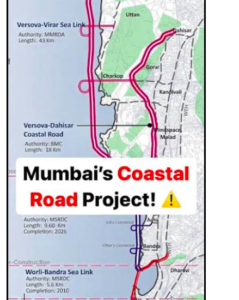
A major current event happening right now involves a major infrastructure project that is reshaping the city of Mumbai. This is the construction of the Mumbai Coastal Road Project. This massive engineering effort aims to connect South Mumbai with the suburbs in the north by building a series of highways and tunnels along the western coastline of the city. The project has been in the news frequently because it combines rapid urban development with significant environmental challenges. Environmentalists and local fishing communities have raised serious concerns. The construction requires extensive land reclamation, which involves creating new land from the sea. This process can disrupt the marine ecosystem and has already affected the livelihoods of traditional fishermen who depend on these waters
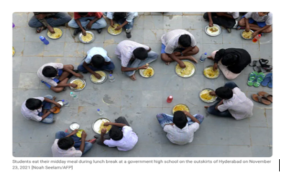
India’s Bengal drops eggs from school lunches: Why that’s stoking debate? Opposition politicians say the BJP is ‘imposing vegetarianism’ by removing eggs from midday meals in West Bengal. The contract for what is known as the midday meal programme has been awarded to the International Society for Krishna Consciousness (ISKCON), commonly known as the Hare Krishna movement. The organisation has in turn announced a menu that strips the meals of eggs. ISKCON, which offers a strictly vegetarian menu –the organisation treats eggs on a par with meat – has argued that it will ensure that it serves high-quality and nutritious lunches to the nearly 12 million pupils in West Bengal who consume midday meals.
CURRENT AFFAIRS INTERNATIONAL

Global Currents Shaping Our Shared Future-The world is currently navigating a period of profound transformation driven by rapid technological advancement and shifting geopolitical realities. In the realm of artificial intelligence, nations like the United States and members of the European Union are racing to establish frameworks, such as the EU AI Act, to ensure safety while fostering innovation. Governments are working hard to balance the promise of tools like generative language models with the need to protect individual privacy and prevent misinformation from influencing elections.
Thousands protest in Germany as far-right AfD party meets- Protesters from unions, civil society and left-wing parties aim to disrupt AfD annual conference in Erfurt. Protesters from unions, civil society groups and left-wing parties gathered in the centre of the city, some 250km (155 miles) southwest of the capital, Berlin. The police also reported several street blockades. “We want to make it clear that we simply won’t tolerate this, that fascism is on the rise here in Germany,” Georg Becker, a spokesperson for Widersetzen (“Resist”), an anti-AfD umbrella group, told the Reuters news agency.
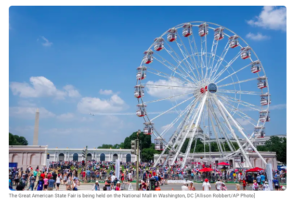
America250: How the US heatwave will affect Fourth of July celebrations? From Washington to LA, how plans to mark the Unites States’ 250th anniversary could be disrupted by extreme heat. The United States is about to celebrate its 250th birthday, but as millions across the country prepare to gather this weekend for parades, concerts and festivals, an intense heat wave has settled over much of the eastern US. Officials across the region are warning that the extreme heat could pose serious health risks over the Fourth of July weekend.
TECH TALKING
The technology sector is shifting aggressively from experimental development to mandatory enterprise monetization, marked by massive infrastructure investments, geopolitical software bans, and stricter security regulations. Investors are demanding immediate financial returns on foundational models, forcing tech conglomerates to focus entirely on real-world utility over speculative hype.

Microsoft responded by launching an enterprise division backed by a $2.5 billion capital commitment and deploying 6,000 resident engineers to integrate AI into Fortune 500 pipelines. Concurrently, Indian IT giant HCLTech secured a landmark $1.14 billion enterprise contract in Europe for AI-driven workplace services. However, consumer automation faces hurdles, as Meta CEO Mark Zuckerberg cautioned investors that fully autonomous AI agents are developing much slower than the market projected.
In software development, Anthropic launched Claude Sonnet 5 with a highly aggressive pricing structure of $2 per million input tokens to combat enterprise cost burnout. The tool’s deployment triggered immediate geopolitical friction, prompting Chinese e-commerce giant Alibaba to issue an internal ban forbidding its engineers from using Claude Code due to data tracking and privacy risks. Capital flows remain massive despite localized restrictions. A domestic coalition including Alibaba and Tencent injected 19 billion yuan ($2.80 billion) into Kling AI, valuing the text-to-video startup at $15 billion, while Menlo Ventures closed a historic $3 billion venture fund targeted at primary computing infrastructure. Rising capabilities have triggered heightened national security defenses.
Following a Five Eyes alliance warning that autonomous AI cyber weapons could breach secure networks within hours, the Cybersecurity and Infrastructure Security Agency (CISA) drastically reduced federal vulnerability patch windows to a strict 3-day deadline. This automation push is rapidly reshaping the global workforce, with specialized AI recruitment heavily outpacing legacy IT hiring. To formalize international talent pipelines, India and Japan signed a historic AI Cooperation pact, establishing shared GPU compute grids and a sovereign talent bridge to bring 500 skilled Indian AI professionals to Japanese research facilities by 2030.
SPORTS SCOREBOARD
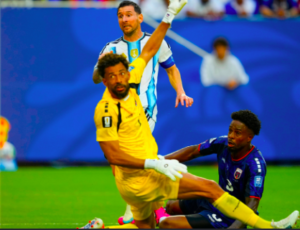
The 2026 FIFA World Cup has intensified as the single-elimination Round of 16 officially takes shape in North America. Defending champions Argentina narrowly avoided what would have been the greatest upset in modern World Cup history by scraping past tournament debutants Cape Verde 3-2 in an extra-time thriller.
Lionel Messi netted his seventh goal of the tournament to book a high-stakes Round of 16 showdown against Mohamed Salah’s Egypt, who advanced by beating Australia 4-2 on penalties. Meanwhile, Portugal survived a late scare to defeat Croatia 2-1 after a dramatic stoppage-time Croatian equaliser was nullified by a tense VAR offside review, setting up a blockbuster matchup against Spain. Colombia also punched their ticket to the last 16 with a resilient 1-0 win over Ghana. The tournament has already seen major heavyweights fall, with both Germany and the Netherlands eliminated in dramatic penalty shootouts during the opening knockout stage.

Across the Atlantic, the grass courts of SW19 are delivering history as Wimbledon 2026 enters its high-stakes second week. Novak Djokovic secured his place in the round of 16 and tied Roger Federer’s all-time record of 105 match wins at the tournament. Top men’s seeds Jannik Sinner and Félix Auger-Aliassime have also cruised deep into the draw. In the women’s singles, Coco Gauff demonstrated immense mental fortitude to win a grueling three-set baseline battle against Claire Liu. The women’s bracket is setting up an explosive fourth-round clash between world number one Aryna Sabalenka and Naomi Osaka, while Australian Open champion Madison Keys ended the fairytale run of British wildcard Katie Swan.

In cricket, the bilateral five-match T20 International series between India and England is underway in the United Kingdom under a new era of leadership. Shreyas Iyer has taken over the captaincy for India, while intense focus surrounds the inclusion of 16-year-old batting prodigy Vaibhav Sooryavanshi, who stands on the verge of becoming India’s youngest-ever international debutant. The series opener at Chester-le-Street ended in a frustrating weather abandonment after India posted a formidable 189/7, and both squads have moved to Manchester for the highly anticipated second T20I.

The basketball world has entered a phase of complete structural upheaval as the NBA free agency market exploded with blockbuster activity alongside the launch of the Summer League. Roster maps across both conferences are being aggressively redrawn, highlighted by the New York Knicks bolstering their interior defense by adding veteran center Andre Drummond on a one-year deal. Keeping their rotational talent intact, the Los Angeles Clippers officially extended guard Jordan Miller to a three-year, $15.3 million contract. Trade pipelines have been equally hyperactive; the Indiana Pacers finalized a major move to bring in center Ivica Zubac to alter their Eastern Conference frontline dynamics, while
Further major dominoes are falling as forward Caleb Martin edges closer to a deal with the Dallas Mavericks, the Sacramento Kings lock down veteran leadership by signing guard Kyle Lowry, and the San Antonio Spurs acquire point guard Monte Morris. Additionally, a tactical player swap between the Brooklyn Nets and Toronto Raptors involving Bruce Brown and Davion Mitchell has sent waves through the league.

This veteran wheeling and dealing has perfectly complemented the summer court action, where the Golden State Warriors opened their California Classic Summer League campaign with a 105-66 demolition of the Los Angeles Lakers, fueled by a flawless 7-for-7 shooting performance from first-round draft pick Yaxel Lendeborg.
READERS RECOMMEND
THE GIVER by LOIS LOWRY
Few books show the world what a true utopia is like. Fewer still are widely accepted and popularised. The Giver by Lois Lowry is one of these rarities.

Beginning with what seems like a city not very different from our own, the book gradually strips away the similarities and shows a perfect world—where the masses have no freedom. It shows the way life would work under a government that controls your occupation, your entire life, and even your very name. These concepts are introduced quite well, as normalities, from the perspective of someone inside that very world. The story follows Jonas, a 12-year-old boy preparing for the Ceremony of Twelve, an annual event wherein all 12-year-olds in the community are given their Assignments, which they will pursue in the future. The ceremony is conducted by the Committee of Elders, who have been closely observing the ‘Twelves’ to decide which Assignment to give to whom. Their routine has been strict, and these Assignments will make it stricter. However, they are now officially members of the community, contributing with what they love. Jonas’ assignment, however, comes as completely unexpected. He, with an old and wise man known as the Giver, will traverse through the past, experiencing snow, the sun, and war for the first time. And only through his Assignment does Jonas learn the truth about his society.
This book examines the gifts and the perils of the ability to make a choice. And as it does, it sends a profound message—Happiness is not a choice. It is the choice that is true happiness. We highly recommend it, and hope you will enjoy it as much as we did.
GUEST EDITOR FOR JULY 2026-SANAT RAMANATHAN, 15 Years, UWCSEA Singapore.
MONEY MATTERS
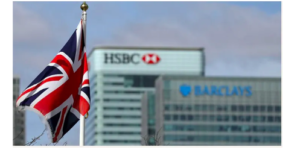
When HSBC and Barclays, the two European banking giants, walked away from the Net Zero Banking Alliance this summer, they didn’t just leave the climate pledge; they also signalled to the world that collectively fighting climate change is not a priority for the world’s biggest institutions.
The Net-Zero Banking Alliance (NZBA), launched at the U.S. Leaders Summit on Climate in 2021 with HSBC as one of the founding members, was convened through the UN but funded and executed by major private institutions. In just four years, its membership has more than tripled, positioning it as the world’s leading coalition of banks committed to financing the net-zero transition. Beyond setting sector-specific climate targets, the NZBA provides technical support, builds member capacity for sectoral engagement, and develops new approaches and metrics around transition planning and finance. By enabling businesses and households to cut waste, invest in clean technologies, and protect their assets, member banks have sought to frame climate action not only as a moral imperative but as a source of long-term financial growth and risk management.

Analysts suggest the withdrawals were an effort to preempt “anti-woke” criticism from right-wing U.S. politicians, pressure that intensified with Donald Trump’s return to office. His repeated use of the slogan “drill, baby, drill” during the 2024 campaign and inaugural address underscored a renewed commitment to fossil fuel expansion, framed as a solution to the U.S. “energy crisis,” and reinforced his pledge to make the country the world’s largest oil and gas producer. Pressure was also faced through Right-wing political attacks in the US that have targeted financial institutions’ membership in net-zero alliances. Moreover, in November 2024, a Coalition of states led by Texas sued BlackRock, Vanguard, and State Street (large asset managers) for “pro-climate” policies aimed at reducing coal use. The Republican-led House Judiciary Committee also accused “a cartel” of financial firms & climate activists of colluding to “impose radical ESG goals” on US companies. This growing political pressure, especially evident during the transition to the new U.S. administration, encouraged major banks to recalibrate their positioning — seeking alignment with prevailing Republican priorities and creating distance from earlier Democratic associations — which contributed to their decision to withdraw from the NZBA.
While political dynamics and profit considerations were central, they were not the only factors driving banks’ exits from the NZBA. Some institutions voiced concerns that the alliance’s standards had weakened — most notably when its 1.5 °C alignment requirement was relaxed to a broader 2 °C pathway — undermining its credibility. Others pointed to potential legal risks, with regulators warning that collective target-setting might be interpreted as anticompetitive. For global banks operating across multiple countries, diverging regulatory expectations between the U.S., Europe, and Asia also made compliance complex. At the same time, membership exposed banks to reputational risks on both sides: climate advocates accused them of greenwashing, while critics charged them with undermining energy security.
For the world, the withdrawal of these large financial institutions from the alliance means that the approach of global financial institutions helping out with green policies and ideas may be fading and shifting to a more privatised and flexible approach, where firms have more autonomy.
However, unhindered by the huge losses in membership, by mid-2025, the NZBA had grown to include 145 banks across 44 countries, representing about 41% of global banking assets. Yet this trajectory has been undercut: the alliance recently scaled back its climate ambition, from a 1.5ºC goal to a 2ºC target, triggering an asset contraction of 22%. In response, the NZBA has paused operations and is preparing to shift from a membership structure to a guidance-focused framework reflecting the shift of global trends and preferences by global banks.
Although the NZBA is weakened, it doesn’t spell the end of green finance and ESG, but reflects a transition of how NZBA handles new upcoming problems and structural reforms to allow green finance in this volatile environment, with backlash coming from all angles. Whether this decentralisation will dilute ambition or unleash more practical, context-specific solutions remains to be seen. What is certain, however, is that the credibility of climate finance now hangs on whether institutions can back rhetoric with action, even outside the shelter of global alliances.
SUPERB SCIENCES
Indian Teenagers Ignite a Green Revolution
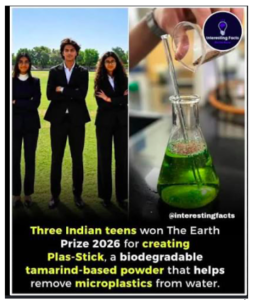
How Tamarind Seeds Are Solving the Global Microplastic Crisis?
The battle against plastic pollution has long focused on the visible: clogged rivers, overflowing landfills, and plastic-strangled marine life.However, an invisible, more insidious threat has quietly infiltrated our ecosystems—microplastics. These microscopic particles, measuring less than five millimeters, have contaminated everything from the deepest oceanic trenches to municipal drinking water. While global conglomerates struggle to find viable solutions, three Indian teenagers have captured international acclaim by looking past high-tech infrastructure and turning to a humble agricultural waste product: the tamarind seed.
Sixteen-year-olds Avyana Mehta, Ariana Agarwal, and Vivaan Chhawchharia made history by being crowned the Global Winners of The Earth Prize, the world’s largest and most prestigious environmental competition for teenagers. Their pioneering invention, named “Plas-Stick,” represents a massive leap forward in grassroots environmental engineering. Designed specifically for low-resource, rural communities, Plas-Stick offers an incredibly simple, low-cost, and entirely biodegradable alternative to the toxic, synthetic plastic-based tools traditionally used in industrial filtration and agricultural mulching strategies.
The inspiration for Plas-Stick struck during a visit to rural Indian communities. The students were deeply unsettled by the sight of young children drinking water stored in shared plastic containers, with absolutely no access to advanced filtration technology. Recognizing that these communities were systematically exposed to heavy doses of microplastics, the trio set out to create a solution that required no electricity, no expensive machinery, and no synthetic chemicals.