Current Affairs India
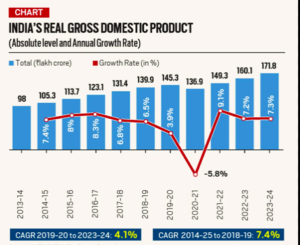
The numbers from the Ministry of Statistics tell a story of resilience: real GDP grew at 7.7% in FY 2025–26, accelerating from 7.1% the previous year and marking India’s third consecutive year of above-7% growth. The Q4 figure — January to March 2026 — came in at 7.8%, making India the fastest-growing major economy in the world by a considerable margin. Manufacturing surged 10.7%, trade and hospitality expanded by 11%, and the services sector posted 9.3% aggregate growth. Nominal GDP reached ₹346.36 lakh crore. Even Fitch Ratings, which issued a mild downgrade flag citing rising energy costs and monsoon uncertainty, conceded that India would remain among the world’s top performers.
The external sector also delivered a surprise. India recorded a current account “surplus of $7.1 billion” in Q4 FY26 — a sharp swing from a $13.2 billion deficit the quarter before. The driving forces were a record $43.5 billion in remittances from the Indian diaspora and net services receipts of $60.4 billion. Despite a merchandise trade deficit of $83.4 billion, the overall Balance of Payments returned to a $7.2 billion surplus, signalling the underlying strength of India’s foreign-exchange earnings.
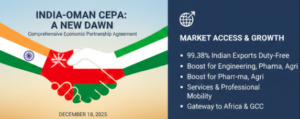
On the trade diplomacy front, the “India–Oman Comprehensive Economic Partnership Agreement” entered into force in early June, having been signed in December 2025. The deal eliminates tariffs on major labour-intensive goods, covers 127 service sub-sectors, and provides India a crucial Gulf trade corridor that bypasses the now-volatile Strait of Hormuz. India becomes only the second country in the world, after the United States, to hold a comprehensive bilateral trade pact with Oman — a quiet but significant strategic accomplishment.
“Ayushman Bharat Digital Mission” crossed 90 crore ABHA health accounts, cementing India’s position as the world’s largest digital health ecosystem by user count. The PM SVANidhi micro-credit scheme marked six years of operations having disbursed collateral-free loans to over 75 lakh street vendors. On World Environment Day, India’s Jai Prakash Narayan Bird Sanctuary in Ballia, Uttar Pradesh, was designated the “100th Ramsar Convention wetland site” in the country — a milestone that Prime Minister Modi celebrated as evidence of India’s deepening environmental commitments.
The Congress party, on the first anniversary of the operation in May 2026, questioned whether the diplomatic outcomes matched the military achievement —Pakistan was not internationally isolated the way it was after the 2008 Mumbai attacks, and that Pakistan’s army chief received “extraordinary warmth” from President Donald Trump in Washington. Questions have also been raised about US Secretary of State Marco Rubio’s early public announcement of the ceasefire and Trump’s offer to mediate — moves India neither invited nor acknowledgedThe debate encapsulates a broader tension in Indian strategic culture: how to assert military hard power while building the diplomatic scaffolding that gives that power international legitimacy.
Prime Minister Modi crossed a significant political milestone. On June 11, 2026, he surpassed Jawaharlal Nehru’s record to become India’s “longest continuously-serving elected Prime Minister”, having completed 4,399 days in office — a fact announced by Home Minister Amit Shah and widely noted across political circles.
Curent Affairs-International
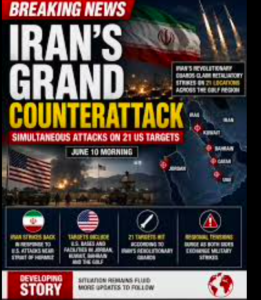
The single most consequential development reshaping world affairs in mid-2026 is the ongoing military conflict between the United States, Israel, and Iran. The strikes, launched even as nuclear negotiations between Washington and Tehran were nominally still in progress, triggered one of the most significant escalations in Middle Eastern history in decades.
Iran has effectively closed the ‘Strait of Hormuz’— one of the world’s most critical oil chokepoints, through which nearly 20% of global petroleum trade flows — creating fuel shortages across parts of Asia and pushing energy prices to levels that drove US inflation above 4%. American households felt it at the pump; US Energy Secretary Chris Wright, rather than acknowledge the war’s role, deflected by blaming Democratic green energy policies.
The war’s ripple effects have extended well beyond the Middle East. In Europe, the EU finds itself caught between US pressure, internal political fractures, and a NATO alliance visibly strained. The US National Security Strategy 2025, released in December, contained the extraordinary declaration that Washington wants to “correct” Europe’s political trajectory and foment the “growing influence of patriotic European parties” — essentially expressing a desire to weaken the European project from within. This follows years of Trump administration tariff pressure on European exports and a dramatic scaling back of US security guarantees to the continent, forcing European states to accelerate their own defence spending. Ukraine, still fighting Russia four years into the full-scale invasion, requires an estimated “$100 billion in military and financial support” just to maintain current lines, according to Chatham House analysts.
The World Inequality Report 2026 documented accelerating wealth concentration — in the first six months of 2025 alone, the wealth of Latin American billionaires grew 12 times faster than the region’s GDP. Some 5.2 billion people worldwide now live in countries where government debt servicing exceeds social spending, coinciding with sweeping international aid cuts from wealthy nations. The fracturing of multilateral institutions — with the US having exited multiple UN bodies — leaves few mechanisms for coordinating responses to crises that are, by nature, global.
The one domain where contest rather than collapse defines the landscape is artificial intelligence and critical minerals. US-China competition in both areas has become, as Stanford’s Freeman Spogli Institute framed it, “the quiet undercurrent beneath nearly every major geopolitical development.” China’s ability to restrict rare earth exports represents a concrete leverage point that Washington is racing to offset through deals like the Quad Critical Minerals Initiative and bilateral pacts with partners across Asia and Africa. The world of 2026 is not a world in free fall — but it is one where the old architecture of rules, alliances, and institutions is under simultaneous pressure from multiple directions, with no clear replacement in sight.
HEAL THE WORLD
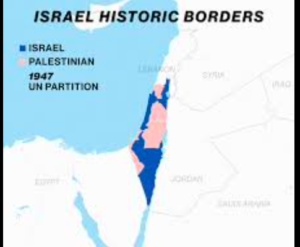
Gaza: The Israel-Palestine Conflict:
It began in the late 19th century with the rise and spread of Zionism—the movement to establish a Jewish state. In 1917, in British-governed Palestine, the Balfour Declaration expressed British support for a Jewish “national home,” causing tensions with the existing Arab population who also sought self-determination. In 1947, the UN proposed dividing the territory into separate Arab and Jewish states. The Jewish leadership accepted this, but Arab leaders viewed it as unjust and favouring the Zionist movement. Israel and Palestine have had mutual tensions ever since. On 7 October 2023, following months of violence between the two, Palestinian extremist groups, including Hamas, launched a coordinated surprise attack on Israel called “Operation Al-Aqsa Flood”. The following day, Israel formally declared war on Palestine.
By now, the damage done is unimaginable. Over 80% of schools and educational institutions have been damaged or destroyed since October 2023. Children face severe shortages of food, water, and sanitation, exacerbating malnutrition and health risks. They are forced to endure the constant threat of explosive weapons, leading to widespread physical injury and long-term psychological trauma. Few are able to escape and go through rehabilitation.
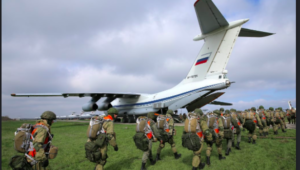
Ukraine: The Russo-Ukrainian Conflict: It began with the ousting of Ukraine’s pro-Russian president, Viktor Yanukovych, after he withdrew from a planned association agreement with the European Union. In response, Russia occupied the Crimean Peninsula, and began arming and supporting separatist forces in the eastern Donbas region, sparking a war that lasted eight years. This escalated into a full-scale war on February 24, 2022, when Russia launched a land, sea, and air invasion of Ukraine, marking the largest conflict in Europe since World War II. Underlying tensions leading up to these events included Ukraine’s desire to align more closely with Western nations and its interest in potential NATO membership, moves which Russia perceived as a threat to its influence and sovereign security.
Since then, thousands of schools have been damaged by shelling, with more than 340 educational facilities impacted a year. Millions of children have been displaced, interrupting their education frequently. It has created an atmosphere of fear, impacting the mental health and daily stability of children significantly.
TECH TALKING
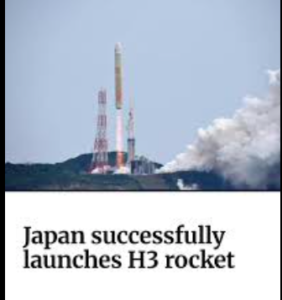
In space exploration, Japan’s aerospace agency, JAXA (Japan Aerospace Exploration Agency), successfully launched its H3 rocket from the Tanegashima Space Center on June 12. This flight marked a major milestone as the first successful H3 mission powered exclusively by liquid-fuel engines, utilising a lighter, more cost-effective configuration. The rocket successfully deployed six small satellites, including equipment designed for ocean observation and space debris removal, marking a full recovery from previous launch setbacks and solidifying the H3 lineup. Meanwhile, the Sun continues to show active behaviour, with sunspot region AR4465 producing a C6.7 solar flare and a coronal mass ejection (CME). Scientists expect a potential glancing blow to Earth’s magnetic field around June 14, which may result in minor geomagnetic enhancements, keeping space weather observers on high alert.
Evolutionary biology has also seen a fascinating discovery regarding the origins of human language. Scientists analysing ancient DNA shared with Neanderthals have identified specific genetic “volume knobs” that appear to influence brain development and language ability. Remarkably, these genetic regions—which constitute less than 0.1% of the genome—were present before the split between modern humans and Neanderthals. This suggests that the biological capacity for language-related cognition is much older than previously recognised, pushing the origins of these critical evolutionary traits deeper into our ancestral past.
WEEKLY WATCH
Set in the quiet English village of Denbrook, The Sheep Detective unfolds as a wonderfully imaginative and deeply moving mystery told from the most unexpected perspective: a flock of sheep. At the center of their world is shepherd George Hardy, who spends his evenings reading murder mysteries aloud to them. Because of George’s gentle storytelling, the sheep believe death exists only in fiction—and that, when their time comes, they simply turn into clouds. It’s a touching, whimsical setup that makes what follows all the more powerful.

When George is found dead outside his trailer, the world of the flock shatters. While reporter Elliot Matthews pushes for a murder investigation and local policeman Tim Derry suspects poisoning, the sheep decide to solve the crime themselves. Leading the charge is Lily, a sharp-minded ewe obsessed with detective stories; Mopple, a ram who alone retains every memory; and Sebastian, a quiet outsider George once rescued from a carnival.
As the humans gather for the reading of George’s will at the local inn, revelations emerge: a secret fortune from a patented medicine, a rewritten will favoring his newly reconnected daughter Rebecca Hampstead, and the existence of a twin son living abroad. The sheep listen, observe, and piece together clues of their own. A dropped bangle. Crushed poison berries. Contradictory statements. Rebecca is swiftly arrested, but something doesn’t sit right.
The mystery deepens dramatically when Lily and Mopple uncover a darker truth in a neighboring meadow—sheep being slaughtered for meat—and narrowly escape with Sebastian’s heroic sacrifice. It’s a devastating turning point. Lily is forced to confront the reality of death and her lifelong habit of willing painful memories away. The emotional weight here gives the film remarkable depth.
As Lily and Mopple rally the flock, hidden clues resurface and Tim begins to question the obvious suspect. The final unraveling of the truth is thrilling, layered, and immensely satisfying—without ever feeling rushed.Will the sheep find out the true killer? To find out watch the movie.