CURRENT AFFAIRS INDIA
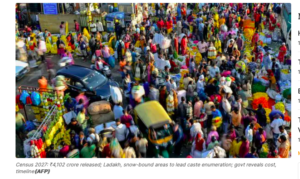
Census 2027: ₹4,102 crore released; Ladakh, snow-bound areas to lead caste enumeration — Govt reveals cost, timeline. The government said the first phase of the Census 2027 has been completed in 31 States/UTs. Earlier, it said that the second phase of Census 2027 will involve “comprehensive caste enumeration.” The first phase of the Census 2027, which involves houselisting and Housing Census, has been completed in 31 States/UTs, Minister of State in the Ministry of Home Affairs, Nityanand Rai, said in response to a question in the Rajya Sabha earlier this week. He also informed the upper house that a total amount of ₹4,102 crore has, so far, been released to States/UTs “for training of Census functionaries, manpower assistance, technical infrastructure, payment of honorarium to Census functionaries etc.”

BCI withdraws NALSAR enrolment ban hours after barring 2026 graduates over CJI convocation campaign. Hours after halting enrolment of NALSAR’s 2026 law graduates over an alleged CJI convocation campaign, BCI modified its order, allowing all students to enrol. It said most students were innocent and will not suffer. Hours after the Bar Council of India (BCI) directed State Bar Councils to halt the enrolment of all 2026 law graduates from hyderabad’s NALSAR University of Law the regulator has modified its order, allowing all students from the batch to enrol as advocates. The revised circular, issued by BCI Chairman Manan Kumar Mishra on Thursday, said the Council had discussed the matter and concluded that the “vast majority” of NALSAR’s 2026 graduating students were innocent and had not intended to disrespect Chief Justice of India Surya Kant. “Accordingly, the Council modifies the order of Chairman with regard to the ban on the enrolment of the NALSAR Students with the State Bar Councils. All the students will be entitled to get enrolled with the State Bar Councils of their choice,” the BCI said.
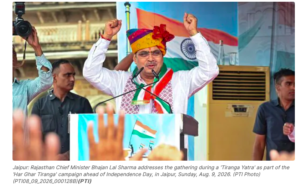
Live-in registration, polygamy ban, ₹25,000 fine: Key provisions in Rajasthan UCC Bill 2026. Under the proposed Rajasthan Uniform Civil Code Bill, 2026, marriage registration will be mandatory within 60 days of marriage once the law comes into force. However, failure to register a marriage within the stipulated period will not make the marriage invalid. The Rajasthan Cabinet, led by Chief Minister Bhajan Lal Sharma, approved the Uniform Civil Code (UCC) Bill, 2026 on 13 August. The Bill, aimed at regulating marriage, divorce, succession, and live-in relationships, will be introduced in the upcoming Assembly session. The UCC Bill proposes a common set of laws governing personal matters such as marriage, divorce, inheritance and adoption, replacing separate religious personal laws. Rajasthan has become the fifth state to come up with a UCC Bill. So far, it has been introduced in four other states: Madhya Pradesh (July 2026), Uttarakhand (March 2026), Gujarat (March 2026), and Assam (May 2026).
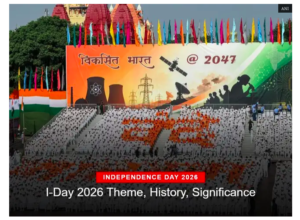
Independence Day 2026 Theme, History, Significance: Why August 15 is celebrated one day after Pakistan’s I-Day. India will celebrate its 80th Independence Day celebration on August 15, 2026, marking 79 years since the country became independent from British rule. This year’s celebrations will honour 150 years of Vande Mataram and focus on ‘Yuva Shakti for Viksit Bharat@2047’.The first theme marks 150 years of Vande Mataram, the song written by Bankim Chandra Chattopadhyay. The song became closely linked with India’s freedom movement and was adopted as the National Song of India.
The second theme puts the spotlight on young Indians and the vision of Viksit Bharat@2047, which refers to the goal of building a developed India by the time the country completes 100 years of independence.Together, the themes connect the history of the freedom movement with India’s plans for the future.
But August 15 also raises a question that comes up every year: If India and Pakistan became independent in 1947 as part of the same Partition, why does Pakistan celebrate its Independence Day on August 14, one day before India? The answer goes back to the final days of British rule, the Indian Independence Act and the decision over when power would formally be transferred to the two new dominions.
CURRENT AFFAIRS INTERNATIONAL

World reacts to US, Israel attack on Iran, Tehran retaliation. EU urges ‘maximum restraint’; mediator Oman warns US ‘not to get sucked in’ further into conflict. The outbreak of conflict between Israel and the United States against Iran, triggered by joint US-Israeli strikes across Iran, has drawn frantic calls for calm as deep consternation spreads across globe.
Criticism has mounted against Washington for taking part in the attacks while still engaged in nuclear negotiations with Tehran. Anger has also surfaced in Gulf states caught up in the conflict, as Iran launches retaliatory missile strikes against US military assets hosted on their soil.
United States
President Donald Trump announced that the US was engaged in a “major combat operation” aimed at “eliminating threats from the Iranian regime” on Saturday morning, as missiles hit numerous areas in Tehran and across the country. Trump pledged to raze Iran’s missile industry and destroy its navy, while urging the Iranian people to overthrow the government.
Israel
A senior Israeli defence official told the Reuters news agency the joint US-Israeli attacks had been planned for months, with a specific date set weeks ago. Prime Minister Benjamin Netanyahu claimed the attacks aimed to remove an “existential threat” posed by Iran. He said the attacks would “create the conditions for the brave Iranian people to take their fate into their own hands”.
Iran
Iran’s Ministry of Foreign Affairs accused Israel and the US of violating the United Nations charter with their attacks and pledged a harsh response, as the country waged retaliatory attacks on Israel as well as in several Gulf states that host US military assets, including Qatar, the United Arab Emirates, Bahrain and Kuwait. “All American and Israeli assets and interests in the Middle East have become a legitimate target,there are no red lines after this aggression.”
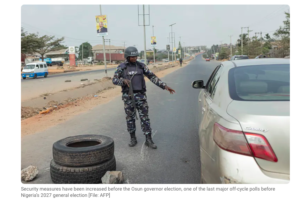
Why Osun’s election matters for Nigeria’s 2027 vote? The result could offer an early signal of shifting alliances and voter sentiment before the presidential race. Voters in southwestern Nigeria’s Osun State will choose their next governor. On paper, it is a contest over who will run a state of about 4.7 million people. But for Nigeria’s political class, it carries a broader question:
What could the result reveal about the alliances, voter loyalties and political machinery that could shape the 2027 presidential election?
Osun is holding an off-cycle election, meaning its governor is elected separately from the presidential and National Assembly. With the next general election due in 2027, Osun is one of the last major electoral tests before the national vote. The result will not predict who wins the presidency, but it could offer an early indication of whether President Bola Tinubu’s political influence in the southwest still translates into votes. Several parties are contesting the election, but the race is largely centred on three candidates: incumbent Ademola Adeleke, who won the governorship on the Peoples Democratic Party (PDP) ticket in 2022 and is now seeking re-election on the Accord Party platform; Bola Oyebamiji of the ruling All Progressives Congress (APC); and Najeem Folasayo Salaam of the African Democratic Congress (ADC).
SPORTS SCOREBOARD
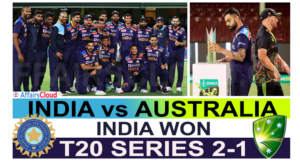
*CRICKET: INDIA VS AUSTRALIA T20 SERIES*
India won the 3-match T20 series 2-1. Youngster Yashasvi Jaiswal scored 89 in the final match and was named Player of the Series. Next up: Asia Cup starts next month.
*OLYMPICS 2026 WINTER TRIALS*
Indian athletes are training for the Winter Youth Olympics. Skier Aanchal Thakur qualified in slalom. India is sending its biggest team yet to Italy in Feb 2027.
DID YOU KNOW? 
1. The longest tennis match ever lasted 11 hours 5 minutes. That’s longer than 2 school days.
2. A cricket ball can travel over 160 kmph when a fast bowler throws it.
3. Esports players train 8-10 hours a day, just like traditional athletes.
TECHNOLOGY & SCIENCE TALK
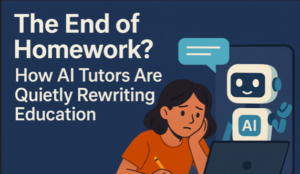
1. AI that does your homework… and more*
Chatbots like ChatGPT and Gemini are now built into phones, laptops, and even Instagram. Teens use them to explain tough math, brainstorm ideas, and make study plans. Schools are also teaching “AI literacy” – how to use AI to learn, not to cheat.
*2. Foldable phones are finally normal*
2026 phones fold like a book and open into a tablet. Brands are making them cheaper now, so you don’t need to spend 1.5 lakh to try one. Perfect for reading, gaming, and notes.

*3. Gaming in the cloud*
No console? No problem. Services like Xbox Cloud and GeForce Now let you play big games like GTA and FIFA directly on your phone or old laptop. All you need is good internet.
*4. AR glasses go mainstream*
Meta and Apple glasses now look like regular specs. You can get notifications, translate languages live, and play AR games just by looking around. Some schools are testing them for science classes.
*5. Green tech push*
Focus is on solar backpacks, biogas, and phone batteries that charge in 10 minutes. India’s ₹2.37 Lakh Cr biogas plan is also creating new tech jobs for young engineers.
*6. Internet safety update*
New laws are making social media add age checks. Apps now have “teen modes” with screen time limits and fewer ads.
*TECH WORDS OF THE MONTH*
*1. AI Agent*
An AI that doesn’t just answer questions. It can plan and do tasks for you, like book tickets, make a study timetable, or organize your notes automatically.
*2. Spatial Computing*
Tech that mixes the real world with digital stuff. Think AR glasses where apps float in your room and you control them with your hands and eyes.
*3. Cloud Gaming*
Playing heavy games without downloading them. The game runs on big computers online and streams to your phone, just like Netflix streams movies.
WEEKLY WATCH

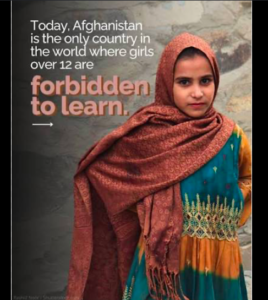
For nearly five years, girls and women in Afghanistan have faced severe restrictions on their right to education. Since 2021, girls have been prevented from continuing formal education beyond primary school, excluding an estimated 2.4 million girls from secondary education by 2026. Women have also been banned from universities since 2022 and face restrictions on employment and participation in public life.
These restrictions have reversed years of progress. In 2001, very few Afghan girls attended primary school. By 2021, almost one million girls were enrolled in secondary education. The loss of these opportunities threatens not only their futures but also Afghanistan’s social and economic development.
Despite these challenges, UNESCO is working to ensure that learning continues. Through community-based programmes, girls and women can access literacy classes, vocational training and psychosocial support. Since 2021, more than 69,000 learners have benefited from these programmes, 73 per cent of them women. In 2026 alone, UNESCO is supporting more than 26,000 learners.
These programmes bring education closer to communities, combining literacy with practical skills such as tailoring. They also provide emotional support and encourage communities to create safe and supportive learning environments.
For learners like 28-year-old Shahla from Nuristan, gaining literacy skills has transformed her life. She can now read and write sewing instructions and practise independently at home. She hopes that every girl in her community will have the same opportunity.
Similarly, 47-year-old Razia from Samangan uses her new literacy skills to manage her tailoring business and household finances. Before joining the programme, she struggled to keep track of payments and nearly closed her shop. Now she keeps accurate records, cuts fabric more precisely and feels confident about expanding her business.
The impact extends beyond individual learners. UNESCO research shows that unemployment among male learners has been reduced by half, while 42 per cent reported increased income. Among women, 33 per cent reported greater household production and nearly 30 per cent experienced increased household income.
These examples show that education is much more than a classroom experience. It can provide confidence, dignity, independence and economic opportunity. UNESCO remains committed to supporting Afghan girls and women, advocating for their right to education and creating every possible pathway for them to continue learning despite the ongoing restrictions.
– Adapted from a UNESCO article by Haroon Safi
RECOMMENDED READS
What happens when a child finds a story in a language that feels like home?
This One Day, One Story, we’re celebrating the joy of reading in the languages children speak, think and dream in – and we’d love for you to be part of it.
One Day, One Story is more than a reading session. It is a celebration of stories, languages and the many people who help bring them to children. At the heart of the initiative is a simple belief: every child deserves the chance to discover the joy of reading, in a language they understand and love. None of this happens without reading champions. Authors, illustrators, and translators do the work of bringing these stories to life, but it’s you who carry them that final mile, into homes and classrooms, straight into a child’s hands. When you sign up, you’re not just hosting a reading session; you’re the reason one more child falls in love with reading.
|
|