HALLOWEEN SEASON SPECIAL

EDITORS SPEAK
We are back after a fortnight this time !
Founders at the school, the run up to it with choir practises till the wee hours of the morning, putting the various publications at the school, we are a part of, to bed, exhibitions to participate and a mini break left us no time to schedule a paper that demands not just our time, but thought into what stays and most importantly what stays out !!
31st October is official spooky time and we are happy to feature a round up from around the world, of traditions that scare, amuse and enthrall !!
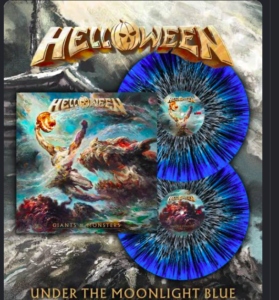
Breaking News–German power metal band Helloween is continuing its monumental 40 Years Anniversary Tour through 2026, celebrating four decades of heavy metal after releasing their album Giants & Monsters.
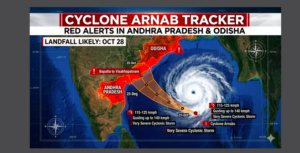

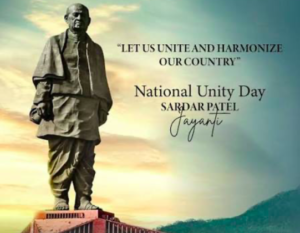
HAPPY BIRTH ANNIVERSARY TO THE OG IRON MAN
Current Affairs- International



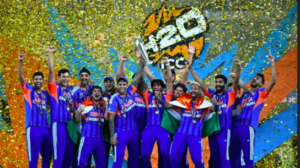
The biggest story comes from New Zealand, where the Indian men’s T20I team has already sealed the series. India toured New Zealand for a five-match T20I series and took the first three games convincingly. On October 22 at Christchurch, India won the opener by four wickets, followed by another four-wicket win at the same venue on October 24. The third match moved to Wellington on October 27, where India chased down a big total to win by six wickets. The team, led by Shreyas Iyer and featuring youngsters like Tilak Varma, Abhishek Sharma and Vaibhav Sooryavanshi, is now aiming for a clean sweep. The fourth T20I is being played today, October 30, at Eden Park in Auckland in front of an expected record crowd of 40,000, with the final game set for November 1 in Hamilton. After this, the ODI series will begin from November 4.

Ahmedabad is hosting the first-ever Commonwealth Kabaddi Championship from October 23 to 31 at the Veer Savarkar Sports Complex. Organised by the Amateur Kabaddi Federation of India, the championship brings together 13 nations including India, Sri Lanka, Bangladesh, Kenya, Nigeria, Canada, England, Scotland and Australia. More than 400 athletes in 23 squads are playing 62 matches under the theme One Breath One Raid One Commonwealth. The Indian men’s team is captained by Surjeet Singh and the women’s team by Nidhi Sharma. The semi-finals are scheduled for today, October 30, with the finals tomorrow. The tournament is also seen as a showcase ahead of the Commonwealth Games 2030 which Ahmedabad will host.

Motorsport fans have reason to celebrate as well. After a gap of 13 years, racing returns to the Buddh International Circuit in Greater Noida. The Indian Racing Festival, featuring the F4 Indian Championship and the Indian Racing League, will be held on October 31 and November 1 at the same track that once hosted Formula 1.
In other disciplines, Indian boxing is in action in Europe. Commonwealth Games gold medallists Jaismine Lamboria and Arundhati Choudhary are leading a 14-member Indian team at the 46th Tammer Tournament in Tampere, Finland from October 28 to November 2. In chess, Chennai welcomes 80 players for the first Chola Chess Open Grandmasters Tournament starting today at ITC Welcom. The field includes 20 Indian Grandmasters and 12 foreign Grandmasters, and will run till November 7.
The week also marks a historic moment globally. Seventeen young Indian athletes across 11 sports will compete at the Dakar 2026 Summer Youth Olympic Games in Senegal from October 31 to November 13. This is the first Olympic event ever to be held on the African continent, with 2,700 athletes from 207 countries participating.
From cricket wins abroad to kabaddi history at home and new beginnings in racing and the Youth Olympics, the last week of October has given teen sports fans plenty to cheer for.
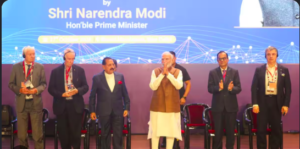
This has been one of the biggest tech weeks of the year, both for India and globally.
In India, all eyes were on New Delhi where Prime Minister Narendra Modi inaugurated the Emerging Science, Technology and Innovation Conclave, ESTIC 2026, held from October 27 to 29 at Bharat Mandapam. The conclave brought together scientists, researchers, startups and industry leaders to discuss 12 themes including artificial intelligence, biotechnology, advanced materials, healthcare and climate sciences. More than 150 deep-tech startup stalls showcased indigenous innovations and three Nobel laureates – Professor Joachim Frank, Sir Richard Roberts and Professor Kostya Novoselov – participated. At the exhibition, IIT-Hyderabad incubated startup WiSig Networks showcased its homegrown 5G and emerging 6G technologies to the Prime Minister, including the Koala Tag, a small device that connects through both mobile towers and satellites for rural areas, and an indigenous 5G network already deployed in villages for schools and panchayats.
On October 30, the Department of Telecommunications said India is now pushing for AI-powered and quantum-secure telecom networks, with over 130 projects funded under the TTDF and with 1.2 billion mobile connections now covering almost every district with 5G. The same week, Google Cloud held its Cloud Day India 2026 in New Delhi with over 600 leaders, unveiling new AI tools for small businesses built on Gemini models, and reminding that Google has committed 15 billion dollars to India’s AI infrastructure.

Markets were also buzzing. Jio Platforms made a historic debut on Dalal Street on October 28 with India’s largest IPO of Rs 30,213 crore, listing at a 21 percent premium. The BSE IT index also had its second best month in two decades, rallying 14.8 percent in October as TCS, Infosys, HCLTech and Wipro held strong margins thanks to AI-led productivity.

Internationally, the week was dominated by AI money and big regulation. South Korea fined Google and Apple a combined 63.7 billion won, about 47.6 million dollars, on October 28 for abusing app store dominance and ordered them to allow external payment links inside apps. Amazon unveiled five new Alexa devices on the same day, including a redesigned Echo Show 16 smart display and a photo frame with Alexa built in.
Apple’s first foldable phone, the iPhone Duo, created a frenzy. After pre-orders sold out within minutes, the phone was reselling in Hong Kong for up to 4,250 dollars, about 18 percent above retail, and up to triple the price in Singapore on launch day.

In AI business, Anthropic filed for what could be a 2 trillion dollar IPO, revealing 16.3 billion dollars in first-half revenue. Elon Musk said SpaceX has closed 40 billion dollars of debt to buy GPUs for delivery in early 2027, warning that many smaller GPU cloud companies may face consolidation. Microsoft offered voluntary buyouts to around 60,000 employees, more than a quarter of its workforce, while planning 175 billion dollars in spending on AI data centres and chips.

On the safety side, two critical PHP bugs nicknamed PHP2Shell were patched on October 21. The flaws could let attackers run code remotely and affected up to 70 percent of websites globally, forcing the UK to take 32 government services offline as a precaution.
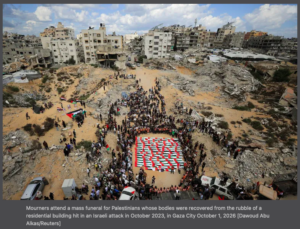
Gaza changed after three years of Israel’s genocidal war
War has devastated Gaza’s economy, education, healthcare, infrastructure and public services, transforming life.
Three years after Israel launched its genocidal war on Gaza following the Hamas-led October 7, 2023 attack on Israel, the Palestinian enclave has been transformed beyond recognition.
Israel’s sustained aerial and ground assault has devastated vast parts of the Gaza Strip, destroying homes and neighbourhoods and severely damaging its infrastructure and essential services.
The war has shattered the lives of a population of around two million people. Repeated displacement and evacuation orders have uprooted families and communities, while more than 74,245 Palestinians have been killed, according to Gaza’s Ministry of Health.
Although a “ceasefire” was announced in October 2025, it has not brought an end to the suffering. The Ministry of Health says 1,462 Palestinians have been killed since the “ceasefire” took effect, while Israeli attacks and other military activity have continued across the Strip.
Years of war have brought the collapse of education, healthcare and the economy, while access to food, water, shelter and other basic necessities has become a daily struggle.
Surviving daily life
For people in Gaza, the war has changed not only where they live, but how they carry out the most ordinary parts of daily life.A home, running water, electricity and a mode of transport – the basic infrastructure of everyday life – no longer exist for many Palestinians in Gaza.In September, according to the UN, 94 percent of Gaza’s population remained in urgent need of shelter and basic household assistance, while 65 percent of households were living in tents or makeshift shelters offering little protection from the elements, having been forced from their homes by Israeli attacks or forced evacuation orders.
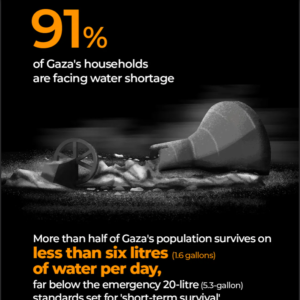
Many families also lacked adequate bedding, lighting, kitchen equipment and sanitation facilities, according to the United Nations.Water has become another daily challenge. Ninety-one percent of assessed households experienced moderate-to-high water insecurity in early August, up from 84 percent in June, according to the UN.Electricity is similarly unreliable. Gaza has remained without a functioning electricity grid, leaving essential services and households dependent on generators and increasingly scarce fuel, engine oil and spare parts.Damaged roads and communications networks have also made transport, phone and internet access and access to basic services more difficult.The result is a daily life reorganised around survival: collecting water, charging a phone, cooking, washing and moving between services all require resources and planning that were once unnecessary.
RECOMMENDED READS








Every October 31, the world seems to develop a taste for the spooky! Streets are decorated with carved pumpkins, children dress up as witches and ghosts, and houses are transformed into scenes straight out of a horror movie. Halloween today is all about costumes, candies and a little harmless mischief.
Halloween means two very different parties happening side by side in North America, and it all goes back to the same old idea – that at the end of October, the boundary between the living and the dead is thin.
*In the USA and Canada – The Modern Halloween*
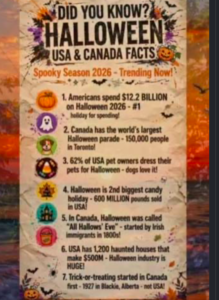
The Halloween we see in movies was actually born here. The tradition goes back to the Celtic festival Samhain from Ireland and Scotland, where people lit bonfires and believed spirits could roam. Irish and Scottish immigrants brought it to the US in the 1800s, and in the 1920s and 1930s it turned into what we know today – costumes, candy and community parades.
Today in the US it’s a full-season lifestyle. From early October you get pumpkin patches, haunted houses, hayrides, corn mazes, fall cafes and horror movie nights. The big day is October 31.
This year, places like New York are hosting the famous Village Halloween Parade on October 31, where thousands walk in costume. Anoka, Minnesota, calls itself the Halloween Capital of the World for its 100-year-old parades. Other iconic spots for 2026 are Salem, Massachusetts, New Orleans, Sleepy Hollow and West Hollywood, where Santa Monica Boulevard becomes a one-mile street party.
Trick-or-treating – kids going door to door for candy – became widespread in the 1950s, and carved pumpkins replaced Irish turnips because pumpkins were easier to find in America.
*In Mexico – Not Halloween, But Día de Muertos*
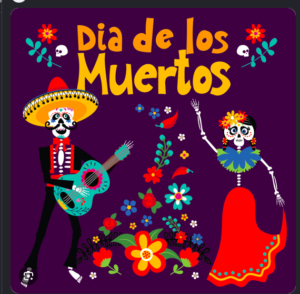
Just south, Mexico does something completely different and much deeper. From October 31 to November 2, Mexico celebrates Día de Muertos – Day of the Dead. It is on UNESCO’s Intangible Cultural Heritage list, and it is NOT Mexican Halloween.
It’s a joyful family reunion with those who have died. Families build _ofrendas_ – home altars draped with orange marigolds called cempasúchil, candles, sugar skulls, photographs and the favourite foods of their loved ones. Marigold petals are laid in paths to guide spirits home. Cemeteries fill with music, food and stories. On November 1, families honor children, and on November 2, adults.
The best places to see it are Oaxaca, Mixquic near Mexico City, Pátzcuaro and Mexico City’s Zócalo, where in 2026 a mega-ofrenda is being built and a Desfile de Día de Muertos parade will feature monumental Catrinas – elegant skeleton ladies in flower hats. Bakeries sell pan de muerto, a sweet bread made just for this time.
There’s also Janal Pixán in Yucatán, the Maya version, which means “food for the souls.”
For teens, the difference is simple: In the US and Canada, you dress up to keep spirits away and collect candy. In Mexico, you set a table to welcome them home with love, colour and marigolds. This year both celebrations fall together – Halloween on Friday, Oct 31, flowing straight into Día de Muertos Nov 1-2, so the whole North American continent will be celebrating from Friday to Sunday.

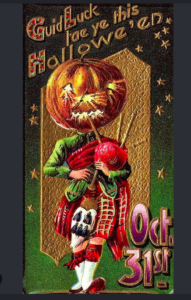
But How Does Asia Honor the Dead?

- China, Malaysia, and Singapore (Hungry Ghost Festival / Zhongyuan / Yulanpen): Celebrated during the seventh lunar month (usually August), families burn fake paper money, leave food and drink offerings, and float river lanterns to appease wandering spirits.
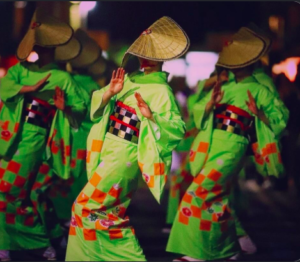
- Japan (Obon Festival): A mid-August Buddhist tradition where families clean ancestral graves, hang red lanterns, and perform Bon Odori dances to welcome returning ancestral spirits.
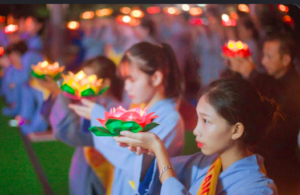
- Vietnam (Vu Lan Festival): Held around the same time as the Hungry Ghost Festival, it emphasizes filial piety, offerings for wandering souls, and family altars.
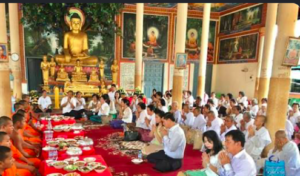
- Cambodia (P’chum Ben): A 15-day religious festival where people visit pagodas to make offerings of sweet sticky rice and food for ancestors.
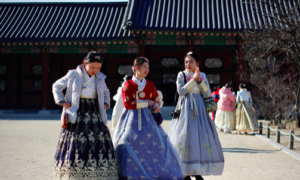
- Korea (Chuseok): A major autumn harvest festival focused on family gatherings, grave-tending, and offer new harvest foods to their loved ones.
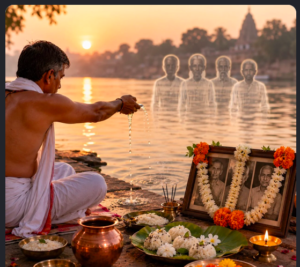
- In India, Pitru Paksha is a 16-day lunar festival paying homage to the dead, usually through offerings of food. It is particularly important for the eldest son to perform the principal rituals, as sons traditionally carry the weight of the family name.