CURRENT AFFAIRS
Current Affairs with politics, science, sports, tech, and culture too:

INDIA IN FOCUS
*1. Monsoon & Floods Update*
Heavy rains hit parts of North India this week. Authorities in Punjab, Haryana, and Delhi are on alert. Schools in low-lying areas closed for safety.
*Why it matters*: Good for farmers, but floods can disrupt travel and daily life.
*2. Science Win*
India’s space agency ISRO tested a new reusable rocket engine. It’s a step toward cheaper space missions in the future.
ISRO chief said: “This will help India launch satellites faster and at lower cost.”
*3. Sports Buzz*
Indian athletes are in final training for the upcoming Asian Games. Badminton and shooting teams are looking strong.
Cricket: India’s U-19 team won their series 3-1. Big names to watch next year.
*4. Education News*
The new NEP guidelines are being rolled out in more schools. Focus: skill classes, coding from Class 6, and less rote learning.
AROUND THE WORLD
*1. Climate & Weather*
Europe and US saw record heatwaves this week. Many cities crossed 45°C. Governments issued “heat alerts” and asked people to stay indoors.
Scientists say extreme weather is becoming more common.
*2. Tech & AI*
Singapore’s biggest investment fund announced a *$30 billion plan* for AI, data centers, and tech.
AI is also being used in hospitals now to help doctors read X-rays faster.
*3. Global Sports*
The FIFA U-20 World Cup qualifiers are happening. Teams from Asia, Africa, and Europe are fighting for spots.
Tennis: Wimbledon champions were crowned last week — teenage players made big upsets.
*4. Culture Spotlight*
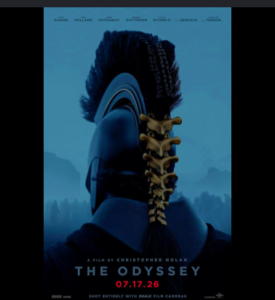
*Christopher Nolan’s “The Odyssey”* released in IMAX. It’s a 3-hour epic about King Odysseus trying to get home. Teens are calling it “history + action + emotion”.
Also trending: New K-pop albums and a viral dance challenge on Instagram.
*FUN FACTS*
1. *Did you know?* The first reusable rocket engine tested by ISRO can be used up to 10 times.
2. *Did you know?* A 16-year-old won a major chess tournament in Europe this month, beating grandmasters.
*WORD OF THE WEEK*
*Heatwave* – A period of unusually hot weather that lasts 2+ days. Can be dangerous without water and shade.
*ONE LINE TAKEAWAY*
`This week: Monsoons in India, Heatwaves abroad, AI and Space making big moves.`
TECHNOLOGY TALKING
Here’s the quick rundown of what’s moving markets:
Rupee under pressure from oil
The rupee closed at *₹96.57/$* on Thursday, near its 2-month low
Why: Brent crude jumped 4% to over $98/barrel after Middle East tensions. Higher oil = bigger import bill + inflation risk for India
– RBI likely stepped in selling dollars to limit losses. Traders saw state banks offering dollars around 96.50-96.55
Markets down 3 days
Nifty 50 fell 0.79% to 23,996 and Sensex dropped 0.92%
Reason: Rising crude + geopolitical fears + FPI selling
Worst hit: IT, Financials, Pharma. Bandhan Bank fell 16.9% after cutting ROA outlook
Key India news
ICICI Bank raising at least $500M via 5-year dollar bonds — first time in 9 years. RBI’s new 1.5% hedging facility made it cheaper
SEBI proposal: Portfolio managers may soon invest in overseas stocks, unlisted debt, and to-be-listed securities. PMS assets hit ₹42.61 trillion
RBI swap measures :
Mobilized $20.72 billion till July 17. Used to cut FX forward liabilities
Fiscal deficit April-Feb FY26 at 80.4% of target
INTERNATIONAL
Big money moves
Singapore’s GIC lplans to put another $30 billion into hedge funds over 3 years. Focusing on AI, global macro, and multi-strategy funds
Goldman Sachs launched new private markets platform for wealthy clients. Demand up as startups like SpaceX stay private longer
Commodities & Gold
Trend funds made money on gold and silver in June, lost on crude oil
Central banks buying gold at record pace due to geopolitical risks
THE BIG THEME THIS WEEK
`Oil + Geopolitics = Market Stress`
Rising crude and Middle East tensions hit both India and global markets. Meanwhile, big funds are rotating into hedge funds, private markets, and AI infrastructure.
Watch fuel prices —
if Brent stays near $100, it could mean costlier petrol/diesel + higher inflation here.
What it’s about?
It’s been 20 years since the Trojan War ended. King Odysseus of Ithaca just wants to get home to his wife Penelope and son Telemachus. But his journey home keeps getting blocked.He faces giant cyclops, singing sirens, the sorceress Circa, and the goddess Calypso. Meanwhile back in Ithaca, people called “suitors” are trying to take over his palace while he’s gone.
The Vibe
This is Nolan’s big IMAX epic. Think _Interstellar_ meets ancient adventure.
Huge ocean scenes, massive battles, and really cool monster moments. It focuses less on “gods vs humans” and more on how hard it is to get home after war.
The Trojan Horse scene-is intense — Nolan shows how scared and cramped the soldiers felt inside it. No cheap action here.
Cast to watch for
Matt Damonas Odysseus – tired, smart, determined
Anne Hathaway as Penelope – strong and patient
Tom Holland as Telemachus – trying to protect his home
Robert Pattinson as Antinous – the main troublemaker
Zendaya, Charlize Theron, Lupita Nyong’o also star.
What critics say
Huge praise. 94% on Rotten Tomatoes.
Called “the definition of epic”, “visually breathtaking”, and “emotionally powerful”.
Some say it changes a few things from the original poem, but most agree it’s one of Nolan’s best.
Is it teen friendly?
Good for teens if you like : adventure, myths, big movies, and emotional stories
Heads up : There’s battle scenes, monsters, and some intense moments. It’s rated 15+ for violence.
Best way to watch : IMAX if you can. It was shot entirely in 70mm IMAX and the visuals are the main reason to see it in theaters.
Verdict: 9/10
If you like stories about courage, home, and not giving up, this is for you. It’s loud, beautiful, and makes a 3,000-year-old poem feel brand new.
`Courage + Home + Hope = odyssey .
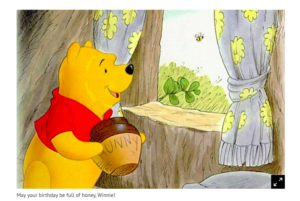
Happy 100th birthday, Winnie the Pooh. May your cake be full of honey. For you must be the most famous teddy bear in the world.
Actually, nobody can agree exactly when your birthday is. For some it’s August 2, 1921, when Christopher Robin got his teddy bear as a birthday present. He named him Winnie the Pooh and they became inseparable friends.
For others, the date is Christmas Eve, 1925, when the first Pooh story by Christopher’s father, A. A. Milne, appeared in the London Evening News. But for most it’s October 14, 1926, when the first Pooh book, Winnie-the-Pooh, was published.
The adventures of The Bear of Very Little Brain and his friends – Piglet, Eeyore, Owl, Rabbit, Kanga and Roo, and later Tigger – in the enchanted Hundred Acre Wood have delighted generations of children. They kindle nostalgic memories in parents and grandparents. They are treasured by book collectors. And they are still inspiring writers and illustrators of children’s books. The only person who doesn’t like Pooh is Chinese President Xi Jinping, who keeps on censoring satirical memes comparing him to the tubby bear.
Birthday celebrations are under way in Ashdown Forest, East Sussex (home of the Hundred Acre Wood, Christopher Robin’s playground) and in places as far-flung as Boston Children’s Museum, the National WWI Museum in Kansas City and the New York Public Library, where Pooh and his stuffed toy friends sit on display behind bulletproof glass. Roo is missing, but Queen Camilla recently presented the library with a bespoke replica.
In a long and prolific career, Milne wrote many successful plays, books, essays and humorous articles. But today he’s remembered for just four books: Winnie-the-Pooh, The House at Pooh Corner, and his two volumes of verse for children, When We Were Very Young and Now We Are Six, which introduced Pooh and Christopher Robin. They were bestsellers on four continents and were translated into more than 80 languages, including Latin.
Scott Fitzgerald’s The Great Gatsby, published about the same time, sold 20,000 copies in its first year. Winnie-the-Pooh sold 150,000 copies in less than three months. Sales since then are estimated at somewhere between 50 million and 100 million copies.
Collectors pay big money for Pooh. British bibliographer Dr Philip Errington, with rare booksellers Peter Harrington, is bringing first editions of the four Pooh books, signed by illustrator Ernest Shepard, to the Melbourne Rare Book Fair, from Thursday, July 30 to Saturday, August 1. They are valued at £10,000 (about $19,000).
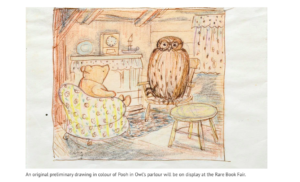
Also on display will be an original preliminary drawing in colour of Pooh in Owl’s parlour, which Shepard created for an omnibus edition of Pooh stories. It’s valued at £60,000. In his days as an auctioneer, Errington sold an original drawing of the Hundred Acre Wood for £430,000, the highest price ever paid for a book illustration at auction. Walt Disney began to buy rights to the Pooh franchise in 1961, and since then, we’ve been swamped with films, spinoff books and masses of merchandise. These days, the Pooh empire is worth more than $5 billion a year. Errington doesn’t mind Disney; he thinks the animated versions are respectful to the originals. But he’s sad that Disney used its own songwriting team, the Sherman brothers, to set Pooh’s hums to music.
HEAL THE WORLD
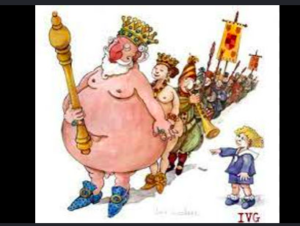
The Emperor’s New Clothes describes , a bunch of adults pretending to see a set of invisible clothes? Clearly these people are stupid! But reading this story it hits differently. Because honestly? We get how a whole room of people could be so terrified to look stupid or lose their jobs that they say nothing. Even when we’re all silently thinking the same thing. Clearly this fairy tale has some substance to it and a very universal message. And like the Emperor’s clothes, that message is quite transparent in its importance.
In Case You Forgot, Here’s a Refresher of this Fairy Tale . . .
In Andersen’s original “The Emperor’s New Clothes,” a rich and powerful emperor cares more about fashion than anything else. This ruler spends ridiculous sums to commission new outfits for himself whenever the whim strikes. Although the original text doesn’t mention it, all these fabulous clothes are probably funded by taxes.
With an emperor so willing to part with so much money, it comes as no surprise that two swindlers arrive in the kingdom. The duo claims to be skilled weavers who know how to spin the most exquisite fabric known to man. The unique quality of this cloth: it appears completely invisible to anyone who is either unfit for their position or stupid. Although this fairy tale has no magic in it whatsoever (which is rare for a fairy tale), magic apparently exists in the world of “The Emperor’s New Clothes.” No one questions the veracity of this invisibility cloth. And the emperor jumps at the chance to wear such a fabric, partially so he can own the most magnificent cloth on earth. But he also wants to know which members of his court he should fire.
But regardless, the emperor desperately wants this not-invisible cloth, so the imposters get to work. Several members of the emperor’s court go to see the cloth before His Majesty, and every one of them pretends to be super impressed while silently freaking out that they see nothing on the looms. This pattern goes on, everyone pretending to see the cloth for fear of being ridiculed. Even the emperor pretends to be dazzled when he visits the empty loom. Of course the two swindlers are pocketing all the fabric and jewels and riches sent to them for the king’s fabulous new outfit. And when they proclaim the ensemble finished, they make a huge show of dressing the emperor in his new clothes that are so finely woven that they feel like you’re wearing nothing at all.
Now the emperor is ready to show off his fly threads to the entire kingdom. Even though he feels completely naked, he leads the procession through the entire kingdom. Everyone compliments him profusely, pretending to see what’s not there.
Until One Person Brings the Whole Illusion Crashing Down
little child, who boldly shouts, “He doesn’t have anything on!” when the emperor struts past. From the mouths of babes, as they say.
This one comment from a child finally breaks the townspeople out of their complacency until they’re all admitting that the clothes aren’t there. Hearing the truth of this makes the emperor shudder, but he continues proudly through the whole city, naked and refusing to admit he got conned. The final detail of the story is the chamberlains following behind the emperor, still pretending to carry the train that isn’t there.
Of Course the Message is Obvious
Adoring clothes as much as he does, the emperor is clearly a symbol of pride, vanity, and excess. All of these qualities make him easy to fool and too proud to admit it. But beyond Andersen’s warnings against pride and vanity is the more complex message of this story: how desperate people are to protect their reputations. At the end of the day, people are willing to lie about anything to protect themselves from judgment, which goes to show just how fragile a reputation can be.
When the fear of being ostracized is hanging in the balance, the motivation to conform and join the groupthink can be overpowering. Especially when people on both sides of you are joining in the lie. It’s easy to see how fear of rejection can lead full-grown adults to say something they know isn’t true in order to spare themselves from rocking the boat. Even the chamberlains at the end of the story are so dedicated to keeping their jobs that they continue the charade—even when an entire crowd is shouting the truth.
No one dares to question the invisible cloth until the king parades through the city with no clothes at all. Then a lowly black servant, who has nothing to lose, points out the obvious: the clothes aren’t real and the guy is naked. The king beats him for saying so, but the damage has been done. Others in the crowd finally admit that none of them see any clothes. Once the king realizes he’s been swindled, the imposters have fled and taken all the gold, silver, and silk with them.
AND THEREBY HANGS A TALE NOWADAYS, THAT IS NOT JUST FICTION !!