CURRENT AFFAIRS INTERNATIONAL
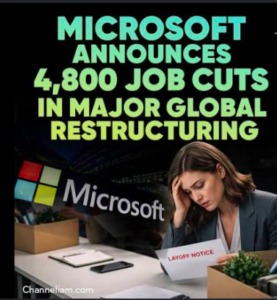
A stark manifestation of the cost-revenue reality of the tech sector occurred when Microsoft announced a sweeping reduction of 4,800 roles, representing approximately 2.1% of its global workforce. This major headcount reduction, heavy on its Xbox gaming division which saw 3,200 roles eliminated and the divestment of multiple development studios, highlights the immense economic pressure on big tech. Despite massive revenue generated by booming demand for its Azure cloud services, the astronomical cost of constructing and maintaining AI data centres has severely squeezed cash flows. Tech executives have made it clear that while these layoffs are not a case of direct automation replacing workers, companies are aggressively optimizing their legacy talent pools to bankroll historic capital expenditures in next-generation artificial intelligence infrastructure. This strategy aligns with a broader industry-wide trend seen across companies like Amazon and Meta, where continuous operational trimming is used to defend corporate margins against spiralling hardware and energy costs.
The global technology landscape and Indian corporate ecosystems are undergoing profound adjustments, marked by massive corporate restructurings, high-level governance transitions, and tightening regulatory oversight. These shifts reflect a broader market reality where the euphoria surrounding artificial intelligence is meeting rigid operational costs, while sovereign regulators are moving quickly to curb the legal and economic risks stemming from new technologies.

In tandem with the “wedding of the century,” the entertainment world pivoted toward America’s 250th anniversary. This milestone birthday triggered a massive slate of televised specials across every major network. PBS hosted “A Capitol Fourth” featuring performances by Alan Jackson and Patti LaBelle, while CNN’s “Independence Eve” in Times Square included a midnight ball drop led by Anderson Cooper and Andy Cohen. In Nashville, ABC’s “Star-Spangled Bash” featured a star-studded lineup including Nick Jonas and Queen Latifah.
CURRENT AFFAIRS INDIA

India’s corporate sector is stabilizing its own internal governance structures, most notably at HDFC Bank, the nation’s largest private sector lender. The bank’s board recently approved the appointment of former Chief Election Commissioner and Finance Secretary Rajiv Kumar as its new part-time chairman. This high-profile appointment brings closure to months of acute executive uncertainty sparked by the abrupt resignation of the former chair, Atanu Chakraborty who stepped down over unspecified internal practices and ethical differences. Capital markets and institutional investors have reacted favoUrably to this stabilization, which was further bolstered by an independent external legal review that cleared the bank of Chakraborty’s allegations. Their extensive track record in navigating the public sector banking crisis, non-performing asset clean-ups, and massive regulatory frameworks is expected to restore long-term corporate compliance and market confidence as the banking giant prepares for its next critical leadership reviews.

While financial institutions resolve internal governance, the is mounting an aggressive push against potential legal loopholes in digital communication systems. The IT Ministry expanded its strict regulatory scrutiny by issuing formal notices to global messaging applications, including Telegram and Signal, closely following a directive issued to Meta’s WhatsApp. The core of the government’s concern is the rolling out and continuous operation of username-based communication features. While these features are marketed by tech firms as privacy-enhancing tools that hide user phone numbers, Indian authorities argue that absolute anonymity removes essential accountability.

The government fears that username-only networks significantly heighten the risk of untraceable phishing, identity theft, impersonation fraud, and “digital arrest” scams. Tech platforms are now legally required to detail their internal anti-impersonation mechanisms, or potentially freeze these features entirely within the jurisdiction, proving that regional security protocols will actively dictate global application architecture.
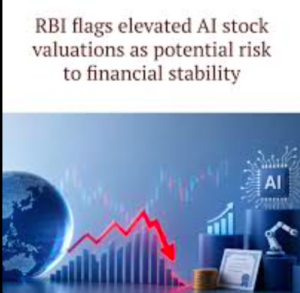
This regulatory anxiety extends deeply into macroeconomic territory, as the Reserve Bank of India explicitly flagged the global artificial intelligence stock frenzy as a structural threat in its latest Financial Stability Report. The central bank warned that hyper-concentrated investments in a handful of global technology firms have inflated equity market valuations beyond sustainable metrics. The RBI noted that if global corporate earnings fail to scale at the pace of these high-cost AI outlays, a sudden and severe asset price correction could follow. Because international tech firms are increasingly leveraging massive debt to fund their infrastructure, any market crash would quickly bleed into international bond markets and non-bank financial intermediaries. While the Indian domestic banking sector remains resilient and largely insulated from direct exposure to this tech-heavy stock bubble,
ELECTRIFYING ENTERTAINMENT

A cultural whirlwind, dominated by a historic celebrity wedding and unprecedented national celebrations. Topping every headline was the high-profile union of Taylor Swift and Travis Kelce, who officially tied the knot on Friday, July 3, at Madison Square Garden. The event was a massive spectacle that even saw some invited celebrities RSVPing “no” as internal details continued to leak to the public. The couple also made waves by donating a staggering $26 million to various charities.

Streaming platforms also seized the early July momentum with significant new releases and series expansions. Prime Video launched its highly anticipated Legally Blonde prequel series, Elle, which follows a teenage Elle Woods (Lexi Minetree) navigating high school in 1995. Disney+ countered with the return of X-Men ’97 Season 2 and major film sequels like Ready or Not 2 and The Devil Wears Prada 2. Meanwhile, Paramount+ bid farewell to long-running hits like The Chi and the Yellowstone spinoff Dutton Ranch, while simultaneously preparing fans for the return of Star Trek: Strange New Worlds later this month.

Here are some movies to look out for for the next few months:
July 17: The Odyssey
July 24: The Dink and 72 Hours
July 25: The Legend of Aang: The Last Airbender
July 31: Spider-Man: Brand New Day
August 7: Super Troopers 3 and Fall 2
August 14: The End of Oak Street
August 21: Insidious: Out of the Further

In the music and celebrity relationship sphere, Shakira continued her global dominance. Her collaboration with Burna Boy, “Dai Dai,” became the most-streamed song on Spotify worldwide, topping the Billboard Global Chart for the week of June 30. However, it wasn’t all celebrations in Hollywood; rumors swirl that Margaret Qualley and Jack Antonoff have separated after three years of marriage, with sources suggesting the couple is currently “taking space”. Finally, television fans have much to look forward to this evening, July 9, as ABC premieres the 12th season of Celebrity Family Feud and the 7th season of Press Your Luck, ensuring the summer entertainment heat continues well into the month.
SPORTS SCOREBOARD

The 2026 FIFA World Cup is currently in the thick of a high-stakes Round of 16, with the tournament moving toward the quarter-finals after a dramatic conclusion to the opening knockout phase. Following the Round of 32, which saw intense battles and surprising exits, the remaining teams are fighting for a place in the final eight. Notable results from the opening of this stage include Morocco delivering a clinical 3-0 victory over Canada, and France narrowly progressing past Paraguay with a 1-0 win decided by a penalty from Kylian Mbappé. The tournament has featured several tight contests, with previous round highlights including Argentina’s narrow 3-2 victory over Cape Verde in extra time and Brazil’s late 2-1 comeback win against Japan, which was sealed by Gabriel Martinelli in stoppage time. As the competition progresses, fans are looking forward to blockbuster fixtures such as Brazil versus Norway, England against Mexico, and an enticing Iberian derby between Portugal and Spain. The tournament remains a global spectacle, with host nations USA, Mexico, and Canada all having successfully advanced to keep the home momentum alive.

In the world of cricket, the spotlight today is firmly on the ICC Women’s T20 World Cup 2026, which is reaching its grand conclusion with the final match between England and Australia. This high-profile encounter is set to take place at Lord’s, representing the culmination of an edition where both finalists have maintained unbeaten records throughout the tournament. The match is widely anticipated, with coverage spanning numerous regions as both sides look to claim the title in a clash of two very clinical teams.

Meanwhile, Wimbledon 2026 is currently at a pivotal juncture as it enters the round of 16 on this Sunday, July 5. The tournament has reached its halfway point, with star players like Novak Djokovic preparing to headline the Centre Court schedule against Roman Safiullin. Other major matchups today include a high-profile battle between world number one Aryna Sabalenka and Naomi Osaka, while the defending champion and men’s world number one, Jannik Sinner, is slated to close out the day’s play on Centre Court against qualifier Mochizuki Shintaro. The competition remains intense across all courts as the field continues to thin out during this second week of the Grand Slam.
HEAL THE WORLD

Global Ramifications Defining Wars- The contemporary geopolitical landscape is defined by a brutal return to industrial-scale warfare, shattering decades of relative stability in Europe and the Middle East. The ongoing Russia-Ukraine war, which has dragged on with relentless severity, serves as a grim template for modern conflict. What began as a lightning-fast attempt to alter sovereign borders has devolved into a grinding war of attrition, fundamentally reshaping international alliances, global energy markets, and the very doctrine of military engagement.
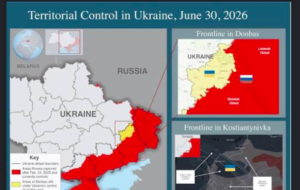
On the battlefields of Eastern Europe, the conflict has merged World War I-style trench warfare with 21st-century technological terror. Hundreds of miles of fortified frontlines are fiercely contested daily, but the real revolution is taking place in the skies. The proliferation of low-cost, automated reconnaissance and kamikaze drones has completely eliminated the element of tactical surprise. Armor and infantry movements are tracked in real-time, forcing both militaries into defensive postures where progress is measured not in miles, but in meters. It is a conflict defined by logistical stamina; victory is increasingly dependent on who can manufacture artillery shells, secure electronic warfare components, and mobilize fresh recruits faster.
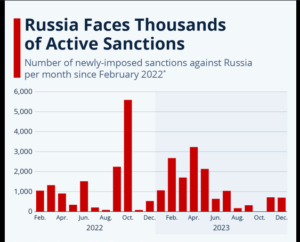
The shockwaves of this war extend far beyond the immediate combat zones, acting as a powerful catalyst for a deeply fractured, multipolar global order. The strict economic sanctions levied against Russia by Western nations have driven a historic realignment. Moscow has Pivot-to-Asia policies, cementing a profound “no limits” economic and strategic partnership with Beijing, while deepening military-supply relationships with nations like Iran and North Korea. Simultaneously, Europe’s aggressive decoupling from Russian fossil fuels has triggered a massive, permanent shift in global energy trade, accelerating the continent’s transition to alternative energy infrastructures while increasing its reliance on American liquefied natural gas.
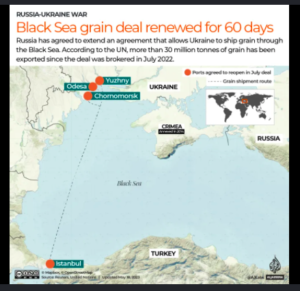
Compounding this global instability is the parallel volatility gripping the Middle East, where regional proxy networks and direct state-on-state confrontations threaten to engulf critical maritime trade arteries. The interconnectedness of these global conflicts highlights a dangerous truth: a crisis in one hemisphere immediately destabilizes another. The disruption of grain exports from the Black Sea, coupled with shipping vulnerabilities in the Red Sea, has triggered severe inflationary pressures on global food supply chains, disproportionately impacting