
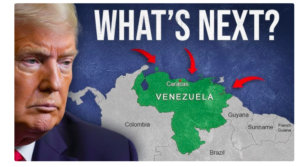
Venezuela with the world’s largest known oil reserves and one of the leading exporters of oil is the second poorest country in Latin America and the Caribbean region. This dichotomy was caused by years of systemic corruption, misrule, oppression, of the illegitimate governance and dictatorship under Nicolás Maduro. Maduro’s regime as head of state was sprinkled with strife and unrest. Protestors filled the streets as evidence of corruption in the nation’s administration led to major discontent and uproar. Military surveillance, police brutality, and state violence was amongst the highest in Latin America. United Nations estimated that 7 million Venezuelans -25% of the total population were in need of humanitarian assistance with no access to basic infrastructure, employment or education and a whopping 96% lived in poverty. Regime imposed blackouts and curfews meant about 90% did not have access to Rising inflation and poverty produced one of the largest migration crises in the world, with an estimated 8 million people fleeing the country, the largest displacement events in modern history. The nation’s over-reliance on oil has led to near economic collapse meanwhile pressure from the United States and other countries led to further sanctions and constriction of Venezuela’s industries
On 3rd January 2026, the United States launched a military strike and abducted President Nicolás Maduro of Venezuela in an Operation codenamed Absolute Resolve. This brutal act has no basis in International Law. Such forced confiscation of a sitting head of state by another country is not valid under international law. It was not an act of self-preservation under Article 51 of the United Nations Charter nor was it authorised by the UN Security Council. International law is many things, but is definitely not a wandering, flexible license for developed counties to behave with absolute disregard to international treaties and charters. The supposition of alleged human rights violations and drugs trafficking to assert and kidnap a foreign head of state is mordant, abhorrent and in defiance of any jurisprudence- the science and grammar of law.
In March, two months after the vandalism and abduction United States of America and Venezuela have reestablished diplomatic relations and have opened consular doors for each other. Delcy Rodriguez has been recognized as the President of the country and seems to have admiration and the seal of approval of US President Donald Trump.
Today, 5 months later amidst the many paradoxes, there seems to have been a tectonic tilt in the balance scale. The citizens are optimistic yet cautious, guarded and even pessimistic about this 180 degree turning of tides from foes of the establishment to friends and strategic allies. Social media is abuzz with images of the de facto interim president, shaking hands with CIA Director John Ratcliff, receiving Chargé d’Affaires Laura Dogu at Miraflores, touring oil fields with Energy Secretary Chris Wright, and signing a titular mining agreement with Interior Secretary Doug Burgum, that were all unimaginable in 2025.
This reconciliation with the U.S. government is in sharp contrast with the continued silence from the authorities about the loss of Venezuelan and Cuban military personnel during the abduction. It seems rather than a change of heart, it is basic survival strategy in the face of an intimidating threat, the absolute silence and justification of use of brute force that seems to have been unchallenged and unquestioned by international bodies and organizations.
Human Rights Organizations have reported 659 people including journalists, human right defenders and opposition leaders have been released from prison. Civil right leaders have started voicing their opinions-a murmur today, but a far cry from the days of Maduro . They have reclaimed unions, organisations and universities and the media. Though a tip of the iceberg, the systemic corruption and breakdown of the basic pillars of the society has been deeply entrenched, and will take years to dismantle the authoritarian model of violence and repression. This transition must be inclusive and must include the society at large, re-institutionalise civic spaces, provide employment, economic flexibility and ensure transparency from the authorities.
The goal should not be a priori, a perfect but a viable and sustainable democratic transition.
The preservation of absolute power with just a name and change of face without actual and tangible democratic reinvention shall lead to adaptive authoritarianism and prove to be the death knell for the country. Only time will tell !