


In May 2026, Indian politics witnessed something unusual, absurd, and impossible to ignore: the sudden rise of the Cockroach Janta Party (CJP), a satirical political movement that transformed internet frustration into a national conversation.
What began as a sarcastic response to a controversial judicial remark quickly evolved into one of the largest youth-led online political movements India had seen in years. With cockroach costumes, viral memes, anti-establishment slogans, and millions of followers within days, the CJP blurred the line between satire and serious political dissent. The movement did not emerge from traditional ideology or grassroots cadre-building. It was born from anger, unemployment, digital culture, and a generation that increasingly feels mocked, unheard, and politically disposable.
The Remark That Sparked a Movement
The origins of the Cockroach Janta Party can be traced to 15 May 2026, during a Supreme Court hearing when Chief Justice Surya Kant reportedly referred to some unemployed youth and activists as “cockroaches” and “parasites of society.”
The statement triggered immediate outrage online. For millions of young Indians already struggling with unemployment, inflation, exam scandals, shrinking opportunities, and social pressure, the remark symbolized something larger: the widening disconnect between powerful institutions and ordinary citizens. One day later, political communications strategist Abhijeet Dipke launched the “Cockroach Janta Party” as a satirical response. Instead of rejecting the insult, the movement embraced it.

“If being unemployed, chronically online, and angry at the system makes us cockroaches,” supporters argued online, “then so be it.” That single act of reclaiming an insult became the foundation of a political phenomenon.
Why the Name Matters?
The name “Cockroach Janta Party” is intentionally provocative. It is both self-deprecating satire and a parody of India’s dominant political branding culture. The title directly echoes the style of established mass political parties while mocking the theatrical nature of modern electoral politics. But the metaphor goes deeper.
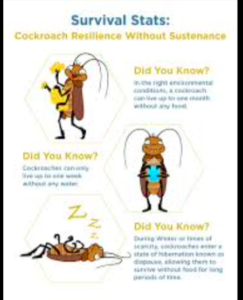
Cockroaches survive hostile environments.
They are unwanted, ignored, and impossible to eliminate.
The movement used this symbolism to represent unemployed youth, struggling students, frustrated job seekers, meme creators, activists, and digitally alienated citizens who feel abandoned by institutions.
The slogan — “Voice of the Lazy & Unemployed” — was another deliberate act of irony. Rather than denying accusations often thrown at Gen Z, the movement exaggerated them to expose societal hypocrisy.
The Rise of Meme Politics

Within 78 hours of launch, the CJP’s Instagram account reportedly crossed millions of followers. Hashtags such as #MainBhiCockroach spread rapidly across platforms including Instagram and X.
The internet had found its newest anti-establishment mascot. But unlike conventional political movements, the CJP weaponized humor instead of speeches. Memes became manifestos.
Sarcasm became protest.
Virality became political mobilisation.
AI-generated artwork, exaggerated campaign promises, satirical posters, and absurdist political messaging turned the movement into a cultural event rather than merely a political organisation.In a country where traditional politics often appears repetitive and inaccessible to youth, the CJP spoke the native language of the internet generation. That language was irony.
Beyond Comedy: The Real Anger Underneath
Although many dismissed the movement as “meme politics,” the issues raised by the CJP reflected genuine frustrations.
Its manifesto targeted:
• unemployment,
• media concentration,
• political defections,
• lack of institutional accountability,
• women’s representation,
• election transparency,
• and post-retirement political appointments.
Behind every joke was a serious accusation: that India’s democratic institutions increasingly serve political elites while ordinary citizens are expected to remain silent spectators. This explains why the movement resonated so deeply with students and young professionals. India’s youth population is enormous, digitally connected, politically aware, and economically anxious. Yet mainstream politics often engages with them only through nationalism, symbolism, or social media optics. The Cockroach Janta Party exploited that vacuum.
A Movement Built by the Internet
Perhaps the most fascinating aspect of the CJP is that it represents a new form of political organisation.
It was not built through rallies first.
It was built through algorithms. Artificial intelligence tools helped design campaign material, websites, posters, and messaging. Influencers, YouTubers, comedians, and meme pages amplified the movement faster than conventional political advertising ever could. The internet became the headquarters. This reflects a larger transformation in democratic politics:
political legitimacy is increasingly being shaped online before it appears on the streets. And unlike traditional parties burdened by hierarchy, the CJP operated with the speed and unpredictability of internet culture itself.

The State’s Response
As the movement gained popularity, it also attracted scrutiny. The blocking of social media accounts, allegations of national security concerns, hacking incidents, and legal complaints dramatically escalated the situation. Ironically, every attempt to suppress the movement appeared to increase its visibility. Supporters argued that silencing satire revealed insecurity within the political system itself. Critics, however, accused the CJP of being performative outrage lacking practical solutions.
Others questioned whether the movement represented genuine public sentiment or simply viral online momentum inflated by digital ecosystems. Both perspectives contain truth. The CJP thrives because modern politics increasingly rewards attention over organisation.
Satire as Political Resistance
Historically, satire has always flourished during moments of political frustration.
When institutions become distant, comedy becomes rebellion.
The Cockroach Janta Party fits into a global tradition where humor is used to expose hypocrisy, mock authority, and challenge dominant narratives. What makes the CJP unique is how perfectly it reflects contemporary India:
a nation where unemployment statistics coexist with hyper-nationalist media spectacles,
where social media outrage competes with real economic despair,
and where young people oscillate between hopelessness and humor. The movement’s popularity suggests that many citizens no longer trust traditional political language. So they replaced it with memes.

Can Satire Become Serious Politics?
This remains the central question. Can a movement built on irony sustain itself beyond internet virality? History shows that many online movements fade once public attention shifts. Organising millions of followers into a disciplined political force requires structure, leadership, policy depth, and long-term strategy. The CJP currently functions more as a mirror than a machine.
It reflects youth frustration rather than offering a complete political roadmap. Yet even if it never contests elections, its impact may already be significant. Because the movement forced India’s political establishment to confront an uncomfortable reality:
an entire generation feels mocked by the system.

The Meaning of the Cockroach
The cockroach metaphor ultimately reveals the emotional heart of the movement.
A cockroach survives where systems decay. And perhaps that is how many young Indians see themselves today —
surviving rising costs, collapsing opportunities, competitive exams, unstable futures, online addiction, and institutional indifference. The Cockroach Janta Party transformed humiliation into identity.
It converted insult into protest.
It turned satire into a political language. Whether it becomes a lasting force or disappears as another internet phenomenon, one thing is undeniable:
The movement exposed the frustration of India’s youth more honestly than many mainstream political speeches ever have.
And that may be its greatest achievement.