

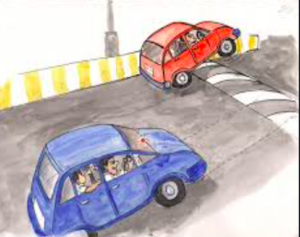
In the satirical piece “The Secret of the Speed Breaker” by H.R. Seetharam, the author utilises sharp irony to critique urban planning and bureaucratic absurdity. The narrative begins with a frustrated driver who, after enduring costly vehicle repairs and witnessing a friend’s injury due to poorly constructed roads, seeks out the “architect” behind the city’s numerous speed breakers.
Instead of encountering a meticulous engineer, the protagonist meets a smug official who proudly defends the chaotic design of these traffic-calming devices. The official explains that the concept was adapted from British “rumblers.” However, he argues that mere sound is insufficient for local drivers. Instead, they require a physical “jolt” to fully comprehend the hazard.
The absurdity peaks when the official confesses that there is absolutely no standardization for these structures; construction is left entirely to the whims of independent contractors and labourers. Rather than aiming for safety or vehicular longevity, the ultimate, cynical objective of these hidden hazards is to startle drivers into taking alternative routes entirely. Through this witty exchange, Seetharam highlights how institutional incompetence is often masked as deliberate societal progress, leaving citizens to navigate the literal and figurative bumps in the road.