
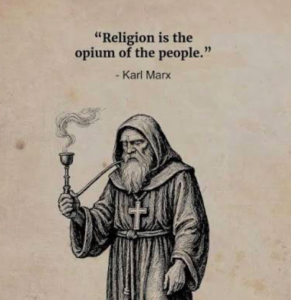
Karl Marx had stated “Religion is the opium of the people”. This statement holds true even today,180 years later, it can both divide and unite and is even seem to shape the geographic borders of the world. A kaleidoscope of colours and riots(pun intended), a master at play, it continues moulding a huge role in shaping societies, laws, and morality, whilst its leaders influence people for social, political, and economic reasons.
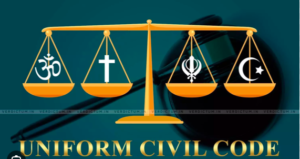
The Uniform Civil Code, a landmark decision, is a proposed law in India that would establish a single set of personal laws for all citizens, regardless of their religion, gender, or sexual orientation. The controversial concept still on paper aimed at legal uniformity over cultural conformity, can provide a consistent legal framework across states and drastically reduce confusion and legal disputes in interstate and inter-faith commerce.
History is witness to political leaders seeking refuge in sects to lend weight and credibility to their causes, tapping and swaying large sections of population through discourses. Often, theology has been used to justify violence, discrimination, and oppression, leading to conflicts, persecution, and injustice. The Crusades, the Spanish Inquisition, and the ongoing Taliban regime in Afghanistan are just a few examples of how religion can be used to incite hatred, division, and violence among the masses. Anti Semitism during the reign of Hitler, Godhra riots of Gujarat, communal violence between Rohingya Muslims and Rakhine Buddhists in Myanmar have resulted in deaths and displacement of people from their homes, under its veiled and evil guise.
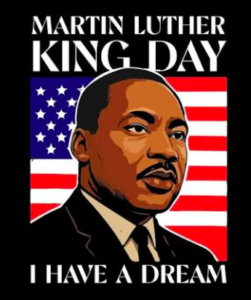
On the corollary, religion has inspired acts of charity, compassion, and social justice, to care for the poor, feed the hungry, and advocate for peace and equality. Change makers like Mother Teresa, Martin Luther King Jr. , and His Holiness The Dalai Lama have used their religious convictions to champion causes of love, justice, and compassion. Faith fosters a social identity and sense of belongingness in people by unifying them with a common thread . This shared identity acts to increase collective and social reforms , multiplying the impact of religious beliefs or ideologies. Festivals like Durga Puja and Ganesh Chaturthi became-Sarvajanik or public to evoke nationalism and patriotism during India’s freedom struggle.
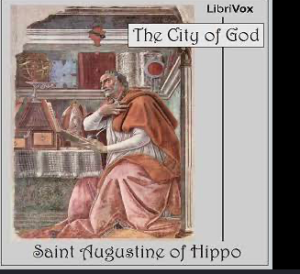
Saint Augustine, wrote extensively on the relationship between religion and politics in his seminal work “The City of God. ” Augustine argued that the state should be guided by the principles of justice and mercy found in the Christian faith, influencing generations of thinkers and leaders to seek a more ethical and humane society. Similarly, head of the Catholic Church, The Pope Francis, known for his progressive stance on social issues such as poverty, climate change, and immigration, have used his position of authority within the Catholic Church to influence global conversations on these pressing issues. By emphasising the moral imperatives of love, compassion, and solidarity, he has inspired millions of people to reconsider their attitudes and actions towards those in need.
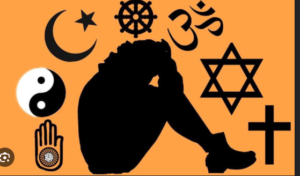
However, religion’s influence can be complex, and its effects might be like the two sided coin depending upon the situation and the people involved. Even so, for most people, it continues to play a significant role; however, its methods and effects might vary in a pluralistic society, often tainting and colouring the shape of the geopolitics in the modern world. Controversies in the modern context have often complicated the dynamics of religious influence. With secularism rising as well as alternative belief systems with the easy access of information technology, it has indeed managed to crate polar reactions and vociferous hardliners in the name of god and the church, to both unite and divide in the name of caste and race. Caste politics is rampant during any assembly elections in India. The bills and reservations offered or promised , many a times playing to the gallery and seem to waver from its appointed course creating a very divisive society.
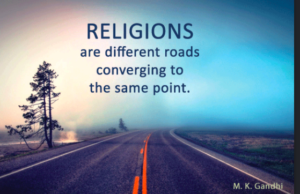
A thought provoking, quote by a 20th century leader who propagated Ahimsa and non-violence, Mahatma Gandhi,” Religions are different roads converging to the same point” seem to wrap how religion and its tentacles slowly seem to proliferate the world just like the many multi-verse stories of The Marvel Universe !
Bibliography