
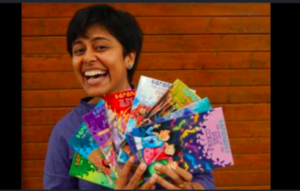
Roopa Pai is one of India’s best-known writers for children. This Bangalore-based author has written over 25 books, ranging from picture books to chapter books and fiction to non-fiction, on themes as varied as science fiction, fantasy, popular science, maths, history, economics, Indian philosophy, life skills, and most recently, medicine. Many of her books are bestsellers and are enjoyed as much by adults as by children. Her best-known books include the 8-part Taranauts, India’s first fantasy-adventure series for children in English; Ready! 99 Must-Have Skills For The World-Conquering Teenager (And Almost-Teenager); the award-winning national bestseller The Gita For Children, listed by Amazon India as one of ‘100 Indian Books To Read In A Lifetime’; and its ‘prequel’ The Vedas And Upanishads For Children. Her TEDx talk ‘Decoding The Gita, India’s Book Of Answers’ has received over 1.8 million views to date. Her most recent book for children is ‘From Leeches To Slug Glue: 25 Explosive Ideas That Made (And Are Making) Modern Medicine’. Featuring the esteemed Roopa Pai in this two part series.

How did your childhood influence your choice of reading ?
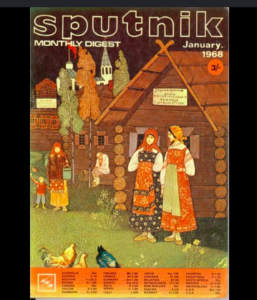
As a child, I was an inveterate reader who read everything from Archie comics to Enid Blyton to Amar Chitra Katha to dictionaries to toothpaste cartons to friends’ English text books (if they happened to be different from the ones used in my school) to books from my dad’s bookshelf. No one at home really monitored what I read, so I suppose I often read books that would today have been considered ‘age-inappropriate’. Most parents did not have much money to spend on books then, but my mum made sure my siblings and I were members of what were called ‘circulating libraries’, of which there were usually a couple in every neighbourhood, so we were never at a loss for things to read. My dad always took us to the government-run City Central Library when we had to do research for a school project (no computers or the internet then, remember?), which kindled my interest in non-fiction books. We were also often taken to a second-hand bookstore in Bangalore that would allow you to swap your old books for other kids’ old books, at a fee. That way, I got to read a lot of books by authors I may not have come across at all otherwise, which broadened my horizons. In the late seventies and eighties, India had a strong bond with the former USSR, so there were always wonderful Russian children’s books, beautifully illustrated and produced, available to us at very low prices. Those became another set of books that I and others of my generation read a lot of. Lastly, the missionary school where I studied always gave away books as prizes, and the nuns really took pains to choose the best children’s classics for this purpose, so that was another influence on my reading.
Was becoming a children’s author accidental or planned ?
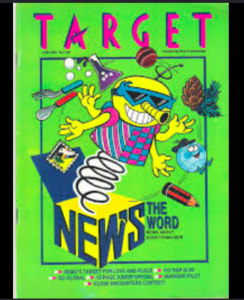
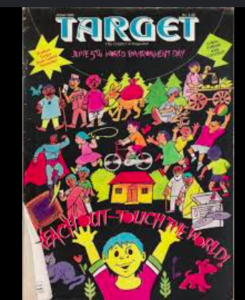
Oh, it was very, very deliberate. I think I must have decided to be a writer, without actually saying that in so many words, when I was about 8. But when I turned 13 and came across a wonderful Indian children’s magazine called Target for the first time, I was so enthralled by it that my desire to ‘be a writer’ crystallized into a desire to ‘be a writer who wrote Indian stories for Indian children’. I also decided that I wanted to work at Target magazine when I grew up. When I had completed my engineering degree, I persuaded my then-boyfriend (now husband) to only apply for jobs in Delhi, so that I could move there after we were married and get a job at Target (and this, with absolutely NO idea if they would want me!). I was that serious about my plan (and that naive!). Astoundingly, things worked out! I moved to Delhi after my marriage, applied for a job at Target, and got it! My childhood dream had been fulfilled, and I was on my way to being a children’s author.
You have made Indian stories cool. Any reasons why your stories are steeped in Indian roots ?
Once again, it was Target, and an earlier magazine called Children’s World, that put me on that path. Until Children’s World, I had only read and loved children’s books that were set in countries other than mine. I grew up thinking that children in the UK definitely had cooler childhoods than mine (and yummier food than we did here!). That was only because of how fabulously Enid Blyton wrote her stories and how droolsomely she described the food her characters ate. But when I came across Children’s World, and then Target (which was smarter and cooler and wackier than CW), and read stories by Indian writers about Indian children like me, I was stunned to realize that my life, my family, my friends, my food, were all just as wonderful as anyone else’s, even though they were different from everyone else’s (which was what made ‘being Indian’ so special and unique). Looking back, I feel quite embarrassed to admit that I needed a mirror to be held up to my life by someone else, never mind that they were some of the best children’s writers in India at that time, to understand just how special my childhood was. I resolved then and there that my stories, whenever I wrote them, would celebrate the joy of being Indian.
Where do you seek inspiration and ideas for your stories ?
Everywhere! In the people I meet, the books I read, the things I see, the conversations I have, trees, Shah Rukh Khan, my doggie… the world is a never-ending source of inspiration.
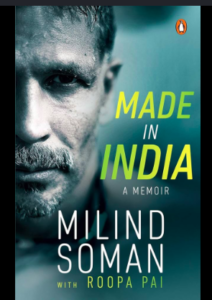
Roopa Pai has co-authored fitness evangelist and supermodel Milind Soman’s award-winning memoir, Made In India, and is currently working on a book of poetry translation, in which she is translating 100 poems of the much-acclaimed Kannada poet, Padma Shri K S Nisar Ahmed, into English. When she is not writing, Roopa can be found leading groups of children and young people on history and heritage walks across her beloved Karnataka, as part of her job as director of a company she co-founded, BangaloreWalks. Part two of her interview with TWTW.
How do you get the lingo of today’s children right ?
Do I?? Thank you! That’s a great compliment. I guess it’s because I started writing books when my own children were young, so I got to be around them and their friends a lot and got to eavesdrop on their conversations. I have also always been around children (because I TRULY prefer their company over many grown-ups), whether I was running a GK Club in my apartment complex or leading history and heritage walks and tours for schools as part of my job as a tour guide with a company I co-founded, called BangaloreWalks.
How important is it to learn about our values and mythology ?
Oh, I think it’s VITAL. India is very unique in that many of its ancient traditions and ideas and worldviews have been passed on faithfully from generation to generation very successfully, over thousands of years, and are still intact in the 21st century. Whether we realize where these ideas come from or not, or why we believe certain things, or act (and react) in certain ways, much of our behaviour and beliefs can be traced to old, old ways of thinking. If we inform ourselves about WHY those ancient geniuses taught the things they did, and understand how empowering those lessons are, we will stop feeling awkward and embarrassed about being different from people in other countries, and appreciate and respect ourselves more. The best part? When we respect and love ourselves, we will also respect and appreciate everyone else more. What’s not to like about that?
Please share the idea behind Bangalore Walks.
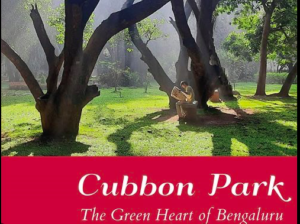
It came from living abroad for a few years, in the UK and the USA, going on history walks there (I have always been a history buff), and seeing how much pride people there took in the little events of their history, and how much joy they took in sharing it with visitors. Of course we also take pride in our history in India, but in a vague, broad sense – we may know about Ashoka and the Mughals and maybe Harshavardhana, and a little bit about Gandhiji and Bhagat Singh and the Indian freedom struggle, but we know very little about the history of our own cities or neighbourhoods. Which is a real pity, because history isn’t just about Humayun’s Tomb or the Taj Mahal, there is history all around us where we live. I felt it was very important for children to first know the history of their own neighbourhoods and cities and understand why they became what they are today, before knowing about a war that happened in faraway Bengal or Delhi (far away from me in Bangalore, I mean!). The thing is, you have to go from inside out, from local to global, from yourself to the world, to truly understand something. Also, unless you know and understand something, like your own city, you cannot love it, and if you don’t love something, you will not protect it or care for it. I wanted my beloved hometown to always have enough people in the next generation to love it enough to care deeply about it. That was the spark behind BangaloreWalks.
Why don’t we see magazines like Sputnik or Target any longer ?
The fact that we don’t is a great pity, but this hasn’t happened just to children’s magazines. Even print magazines for adults are so seldom seen or read or published anymore. Online magazines are so much cheaper to produce than print magazines, for one thing. Also, online distribution is so much easier – just mail it out to everyone for free! Print magazines, on the other hand, have to be actually mailed out via the postal services, which again costs money. Unfortunately, there isn’t even an iconic ONLINE children’s mag out there, either, at least as far as I know (but I could be wrong!). I nourish a strong hope and conviction that print magazines will be back in the not too distant future, because people will tire of doing everything on their devices, and will want to sit in an overstuffed armchair at home or lie on the grass in a park, hold a nice, glossy magazine that has just arrived in the post, and surrender to the tactile, analog joy of this kind of reading experience.
How important is it to follow a routine to write ?
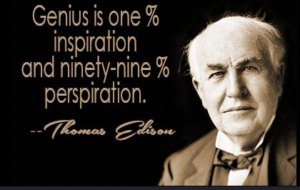
More important than ANYTHING else, in my opinion. However much we may think of writing as a ‘creative’ exercise, and however much the creative process is associated with ‘sudden inspiration’, leading to an outpouring of deathless prose, in my experience, books get started, written and finished ONLY with ‘boring’ routine and discipline. Talent is all very well, but as Edison said, ‘Genius is 1% inspiration and 99% perspiration’.
Any advice for children?
Take your cues from the ancient texts. Question things (things people tell you as ‘the absolute truth’, authority, tradition, your own strong biases). Stay curious (because the world is endlessly fascinating). Keep an open mind (to receive other opinions and points of view, so that you may expand your own understanding of an issue). Stay true to your nature (never mind if the world tells you it isn’t ‘cool’). Trust your gut (YOU know better than anyone else what is the right action for you). Don’t waste your energy and effort competing with others, compete with yourself – focus each day on being a better version of yourself than you were yesterday.