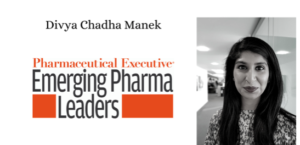
Dame Divya Chadha Manek was awarded the Order of the British Empire for her work in trials and development of the multiple Covid-19 vaccines; including Astra Zeneca, Novovax and Janssen in the UK that led to its swift rollout. With schools opening, and vaccine rollouts for children expected across the globe, she shares her insights in her two part interview. Born and brought up in India, Divya Chadha Manik moved to the UK to complete a degree in Psychology at Royal Holloway. She was awarded an India academic scholarship to study a Masters of Clinical Research at University of Birmingham. She began her career with the National Institute for Health Research (NIHR) in 2007, initially as a Clinical Studies Officer. In 2013, she was appointed as NIHR Clinical Research Network’s (NIHRCRN) National Business Development and Marketing Manager. She was appointed as the NIHR CRN’s Head of Commercial Business Development in 2015 then in 2020, Divya was seconded to the UK Vaccines Taskforce (VTF) which was set up in response to the COVID-19 pandemic to lead the UK’s search for a safe and effective vaccine. She was responsible for supporting global pharmaceutical companies to rapidly generate the evidence required for marketing authorisation of COVID-19 vaccines. She also played a pivotal role in conceptualising and developing the NHS Vaccine Research Registry.She was awarded the Order of the British Empire for her work in trials and development of the multiple Covid-19 vaccines, including Astra Zeneca, Novovax and Janssen in the UK that led to its swift rollout.
Tell us about your growing years. Who were your role models while growing up?
During my school years, I was very much into sports. I loved swimming and swam competitively at school, district, state, national and international level. After a few years of swimming I also picked up rowing and then began the same competitive
level of rowing too. I had different role models for different things in life. Sir Steve Redgrave, Ian Thorpe, Roger Federer, all were role models for me. When I found some time to watch TV, I also watched and tracked Oprah Winfrey. To me, all of
these people represented key skills I admired- hard work, dedication and immense mental strength.
Please tell us why did you move to the UK as a teenager?
Oh for a multitude of reasons! I wanted to fly away and to be able to do what I wanted to do in life. My parents were very supportive of me in everything I have ever wanted to do, but I knew I would always be within the boundaries of what society allowed. I did not want to be in the category of getting married early. I also wanted to see if I may be able to take my sports competitiveness to a higher level. I was considering options between the UK and the US, and given the further distance of the US from my parents, I decided the UK would be a better option. I did not even apply to any university in India- I just knew where I wanted to go and there was no plan B!
Please share your role in the vaccine development?
My role as part of the UK government’s Vaccine Taskforce was to oversee the clinical trials of the COVID 19 vaccines which were being conducted in the UK. Firstly, that included working with the vaccine company to convince them to run their trials in the UK. Then the task of actually overseeing the delivery of the clinical trials. This meant that I had to support these manufacturers with running their trials as fast as possible, as safely as possible, to ensure that they had the clinical data they needed to get regulatory approvals. Without successful delivery of clinical trials, we would not be so lucky worldwide to have access to these vaccines. My role is essentially focused on clinical trial delivery. Not many people know, or even think of it as a career! I did not either until I did my masters in clinical research. We all take medication and don’t realise the importance of clinical research. Without research, we cannot move forward in science and innovation. I am very passionate that my role enables me to bring new treatments to patients faster- and this was highlighted during the pandemic.
What were the challenges in development of the vaccine?
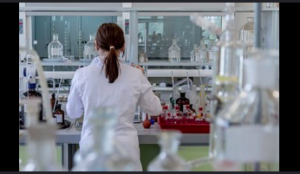
The list is endless! Vaccine development in normal times is a great challenge. So, you can imagine what that is like in the middle of the pandemic. Every day I used to hear the number of cases, deaths and realised the pressure on everyone involved in vaccine development was incredibly immense. This was not just in clinical trials where these trials needed to be set up quickly and then volunteers needed quickly to test the vaccines. Challenges in every aspect of even creating the vaccines. I remember my colleagues who were leading on manufacturing. There was a shortage of the actual caps on the bottles! Shortage of lab kits during the delivery of clinical trials. An exhausted workforce- everyone was working so hard, all hours of the day-tiredness and fatigue were prevalent. The biggest challenge of all was the uncertainty. Who knew if these vaccines would even work?! Not every vaccine makes it past the line and we are incredibly lucky in the world that science has triumphed and saved the uncountable lives of people through vaccination !!
When can we expect vaccines for children?
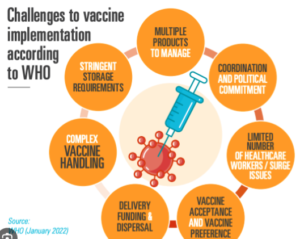
As with everything over the last 12-16 months, answers to all questions are on the basis of trial results. When there is enough data from research which shows us that it is safe and effective for children to take vaccines. And when there is enough data, then is there enough availability of the vaccine, and finally, balancing the pros and cons. Each country makes its own decision. In the UK, children are being offered the Pfizer/Biontech vaccine if they have underlying health conditions which make them more susceptible of developing severe covid 19 or if they live with individuals who are immunocompromised, to help them stay safe.
How was your meeting with the Queen?
I am still awaiting my date to go to the palace! Due to the pandemic there is a backlog and I have to await my letter. I cannot wait to go and see her at the palace. I have a 6 year old daughter who does not really believe me when I tell her I will get to see the Queen!
Your proudest moment to date?
Gosh there are so so many! From representing my country in swimming and rowing events internationally to when my father came to the UK to see my graduation from my Bachelors of Science at Royal Holloway. However, there was one time where I almost had tears in my eyes. After I finished my degree and I was considering my next steps in my career/life, my eye caught a masters degree in clinical research from the University of Birmingham. I liked the sound of the course and I knew I wanted to study. However, I did not have the funds to do so. There was a scholarship application process and I made the application to the University, only to be awarded an “India” scholarship. This was awarded to just a couple of students from India across the whole university. I received a letter which stated that the scholarship was awarded to me because of “academic excellence”. When I shared the letter with my parents, my father was just so incredibly proud. Growing up, I was into sports and during my school years, I just managed to get by. I had managed to make my parents proud but I had also managed to turn myself around. That was a pretty special moment for me I will always remember.
Any advice to children?
I have two children myself,2 girls aged 2 and a half and 6 years. To my older daughter, I am like a broken record. I always say to her that she “can do everything”. Self belief is truly important. If you believe, it will happen. “Be confident, be brave and just do it”- my poor children are subject to my “advice” everyday!