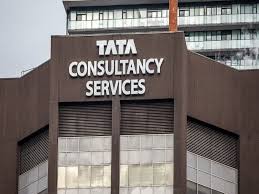
Out of all the success stories of large Indian businesses in the last fiscal year, the one about Tata Consultancy Services (TCS) stands out the most. Throughout the financial year of 2025-26, it has experienced multiple changes, both intentional and unintentional. This article explores how they responded to external pressures beyond their control and manipulated them to their advantage.
In 1968, the Tata Group started a firm for humble punched-card services. By 2022, it had morphed into a massive organization with over 613,000 consultants. By FY 2025, with revenues exceeding ₹2.8 lakh crore ($30 Billion USD), it was ready for its most radical evolution yet.
Macroeconomic Volatility & The Strategic Pivot
Last financial year, persistent uncertainties and geopolitical volatility in the Middle East forced a reduction in discretionary technology spending. This resulted in the company’s first annual constant currency revenue decline (-2.4%) since its public listing.
In response, TCS pivoted to a ‘revenue-margin decoupling’ strategy. By optimizing internal delivery and rebalancing its workforce pyramid, they achieved a four-year operating margin high of 25.3%. They moved from infrastructure to AI, forging alliances with OpenAI and NVIDIA, following a three-pronged strategy: build, partner, and acquire.
The Shift: From AI-First to AI-Led
As AI began to automate traditional coding, TCS faced “AI-led revenue deflation.” They responded by moving towards outcome-based pricing and complex fields like Agentic AI (autonomous agents) and Physical AI (robotics).
HyperVault: The Physical Core
Deviating from its historical “asset-light” model, TCS established HyperVault. This unit is dedicated to building 1 Gigawatt of data center capacity in India. Realising that AI depends on physical hardware, TCS has now positioned itself as a core architect of the AI stack.
Talent & Sustainability
The workforce saw a net decline of 23,500 employees, triggering a ₹1,388 Cr restructuring exercise. The focus shifted to the Internal Talent Cloud, an AI tool that matches employees to high-order skill projects.
Furthermore, sustainability evolved from a compliance exercise to a core business offering. Through “Digital Spines” that track energy wastage, TCS now helps clients achieve Sustainability Value Added (SVA), often cutting energy bills by up to 20%.