CURRENT AFFAIRS INDIA 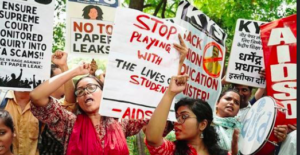
NEET Paper Leak Investigations: The CBI has accelerated its investigation into the widespread NEET-UG paper leak with the arrest of Shivraj Raghunath Motegaonkar, founder of Latur-based Renukai Chemistry Classes. A parliamentary panel summoned the NTA chief to review examination reforms. The biggest breakthrough came from Pune, when the agency arrested chemistry lecturer PV Kulkarni. He was involved in the NTA examination process and had access to the question papers. Union Education Minister Dharmendra Pradhan has ordered “foolproof” arrangements and a review for the upcoming NEET re-examinationto ensure credibility. The exam is now scheduled to be reconducted on June 21st.
Diplomatic Relations with Nordics: During his visit to Norway, PM Narendra Modi announced the elevation of India-Nordic ties into a ‘Green Tech and Innovation Strategic Partnership’ and thanked Norway for its continued backing of India on global anti-terrorism efforts.
Manipur Unrest: A deadly ambush on tribal church leaders by suspected armed extremists in Kangpokpi district, Manipur, has escalated regional tensions and prompted demands for targeted investigations.
The prolonged violence between the two ethnic people: the majority Meitei and the tribal Kuki-Zo communities – which erupted into a major conflict in May 2023—has resulted in over 260 deaths and the internal displacement of approximately 60,000 people who remain in relief camps.
The Enforcement Directorate (ED) arrests AAP Goa leader Deepak Singla, in a money laundering case. AAP chief Arvind Kejriwal defends Singla, alleges he has been arrested for refusing to join the BJP. The ED arrested Singla in an alleged money laundering case following searches in Delhi and Goa.
West Asia & Energy Security: The Ministry of Defence confirmed that India’s energy and fuel supplies remain secure amidst the ongoing West Asia crisis, bolstered by the safe arrival of a 20,000 metric tonne LPG vessel at Deendayal Port in Gujarat.
Supreme Court Order on Stray Dogs: The Supreme Court refused to recall its directives permitting the euthanasia of rabid or dangerously aggressive dogs, asserting it cannot remain oblivious to the threat they pose to human life.
CURRENT AFFAIRS INTERNATIONAL
The Middle East remained another major focus of global politics this week. Diplomatic negotiations between the United States and Iran have entered a difficult phase. Former US President Donald Trump accused Iran of deliberately delaying peace discussions while both countries remain divided over sanctions, nuclear policies, and regional security.
The Strait of Hormuz continues to be strategically important because a large percentage of the world’s oil supply passes through this route. Any escalation between Iran and the United States could directly impact global energy prices and international trade.
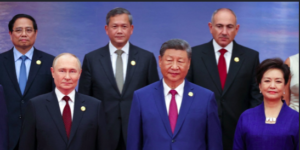
China has continued to strengthen its global diplomatic outreach. Chinese President Xi Jinping hosted several international leaders this month, signaling Beijing’s growing ambition to shape global politics through bilateral partnerships and economic diplomacy.China’s strategy focuses on increasing influence in Asia, Africa, and Europe while presenting itself as an alternative global power center to the United States. Discussions on trade cooperation, infrastructure investment, and strategic partnerships have become central to Chinese foreign policy. The increasing rivalry between China and the United States over technology, trade, and Indo-Pacific security remains one of the defining features of international politics today.
Europe also witnessed internal political tensions this week. In Spain, Prime Minister Pedro Sánchez faced criticism amid corruption investigations connected to members of his political circle. The issue has intensified debates regarding political accountability and governance in the country.
Meanwhile, discussions on defense cooperation, migration policy, and economic recovery continue within the European Union. Many European governments are reassessing their security priorities because of the Russia–Ukraine war and changing global power dynamics.
This week’s international current affairs demonstrate that global politics is entering a period of increasing uncertainty and transformation. The Russia–Ukraine conflict, US–Iran tensions, China’s diplomatic expansion, and political instability in Europe are reshaping international relations. The coming months will be crucial in determining whether diplomacy and international cooperation can reduce tensions or whether geopolitical rivalries will deepen further. In an interconnected world, political developments in one region now have immediate economic, security, and humanitarian consequences across the globe.
SPORTS SCOREBOARD
The French Open kicked off in Paris, the Clash in Italy wrestling competition will begin, and both football players and fans were hit with a double shock. Just months before the World Cup, it’s hard figuring out where to begin.
Starting off with major ongoing tournaments—the French Tennis Open began on the 24th of May in Paris, and will conclude on the 7th of June. It, unfortunately, is also currently grappling with a heat wave, with temperatures consistently exceeding 32 degrees Celsius, causing multiple players like Gabriel Diallo and Novak Djokovic—to seek medical attention or even retire.
The IIHF (International Ice Hockey Federation) Men’s World Championship, having begun on the 15th of May, has seen intense action in Zurich and Fribourg, Switzerland, and will conclude at the end of this week, of the 31st of May.
The European Rhythmic Gymnastics Championships have been occurring in Varna, Bulgaria, since the 27th of May, and the finals will be held at the end of this week, on the 31st.
The Giro d’Italia Women’s Road Cycling race commenced on the 30th of May, in Italy. It occurs in nine stages, the first stage being from Cesenatico to Ravenna. The ‘Clash in Italy’ wrestling championship is scheduled to begin on the 31st of May, in Turin, Italy.
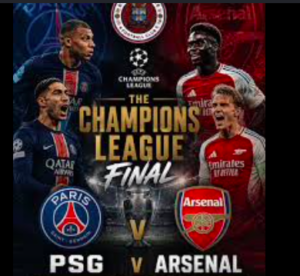
In football, the highly anticipated UEFA Men’s Champions League finals took place on the 30th of May, in Budapest, Hungary. If the Parisians dominate, they will be defeating Arsenal along with their UCL dream. If Arsenal beats PSG, they will finally achieve their dream of winning the Men’s UCL for the first time in the history of the club. All that is left now is for fate to choose—PSG, who long to taste victory again, or Arsenal, who have only heard of it and now want some for themselves?
The World Cup roster for the US and Spain has officially been announced. Interestingly, no Real Madrid players were included in Spain’s. Fans also received a great shock when Lionel Messi himself suffered a worrying injury on May 25, just 18 days before the World Cup, limping out of an Inter Miami match. Another shock came with Manchester City’s manager Pep Guardiola’s leaving the club earlier than was expected.
This week has been one packed with events and anticipation in the world of sports. But remember, the peak of excitement is not here yet. See you in the next issue!
MONEY MATTERS
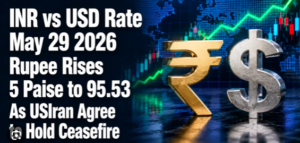
The Indian rupee crossed ₹96 per U.S. dollar in May 2026, compared to around ₹85 just a year earlier — a depreciation driven by rising crude oil prices, geopolitical tensions, higher U.S. interest rates, and sustained capital outflows from emerging economies. Economists have warned that India now faces a Balance of Payments deficit for the third straight year, while the RBI projects GDP growth at 6.9% for 2026–27. It is a paradox the country knows well: a booming narrative on the world stage, and a quietly straining foundation beneath it.
Then there is the policy shift that will affect more Indians than almost any other decision this year. The Centre officially notified that the Mahatma Gandhi National Rural Employment Guarantee Act will cease from July 1, 2026, replaced by a new framework called VB-GRAMG. MGNREGA, for all its inefficiencies, was a lifeline for hundreds of millions of rural workers. Whether its successor delivers with the same reach remains an open — and urgent — question.
TECH TALKING
Anthropic, the creator of Claude.ai, is experiencing giant successes, closing a $30 billion funding round with a valuation of over $900 billion, surpassing OpenAI’s $852 billion valuation in March. Anthropic also projects its first quarterly operating profit ever in the second quarter of 2026 (1st April to 30th June), with an estimated revenue of $10.9 billion. This is 130% more than the previous quarter (1st January to 31st March). They also revealed a massive $45 billion contract with SpaceX, leasing multiple units of hardware and over 300 megawatts of computing capacity from them. It also strengthened its presence in India by appointing Sangeeta Bavi to lead its startup efforts here. Major technology firms are expanding AI personalisation features. Google, for example, has introduced ‘Personal Intelligence’ in Gemini to connect across services like Gmail, YouTube, and Photos.
Pope Leo XIV released his first major papal encyclical, ‘Magnifica Humanitas’ (‘Magnificent Humanity’) on the 25th of May. This document calls AI the Industrial Revolution of our time, focusing on “the protection of the human person”. The Vatican also mentioned that Anthropic is a trustworthy partner on safety.
US President Donald J Trump has reportedly cancelled the signing of a proposal to establish a pre-release vetting process for advanced AI models. This was apparently due to his concerns that the order risked undermining America’s competitive edge.
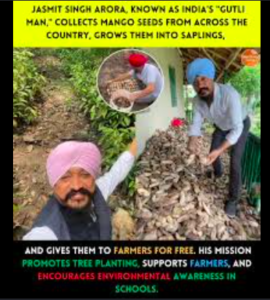
Dr. Jasmit Singh Arora, also known as the “Gutli Man of India,” is a doctor, entrepreneur, and social worker from Kolkata. He became famous for his unique environmental campaign that focuses on collecting discarded mango seeds, also called gutlis. Every summer, millions of mango seeds are thrown away as waste. Dr. Arora realised that these seeds could instead be used to grow trees and help the environment.
He started a movement where people clean, dry, and send their mango seeds to his organisation instead of throwing them in the garbage. These seeds are then planted in nurseries and grown into healthy saplings. His mission is to plant 20 crore fruit trees across India. The campaign not only helps reduce waste but also increases greenery and supports biodiversity. One of the main aims of his project is to help farmers in rural areas. Many farmers depend only on crops like paddy and often struggle to earn enough money. Dr. Arora provides free mango saplings to these farmers so that they can earn extra income in the future by selling fruits. This creates both environmental and economic benefits. At first, many people laughed at him and called him the “Pagal Sardar” because he collected seeds from garbage. However, his hard work and dedication slowly earned people’s respect. Today, he has inspired thousands of people to care for nature and take small steps towards a greener future. His campaign proves that simple ideas can create a huge positive impact on society and the environment.