


It was a warm and quiet evening, the sun was low. Hot days like these were the perfect times to listen to a rhapsody, thought Nico, a young boy part from the Babylonian family. Little did he know that he was in luck. A couple of minutes later a knock was heard. A minstrel walked in with a beguiling smile. The family served the minstrel a proper meal and waited eagerly for another mellifluous story.A tradition that occured once in a blue moon.

The minstrel sat, cleaned his face, brushed his long moustaches , had a sip of water and this began…
“The wind howled through the narrow mountain passes of the Hindu Kush, biting at the faces of Alexander’s men as they trudged forward. The air was thin, each breath a jagged gasp, and the snow and ice clung to the jagged rocks like the remnants of ancient glaciers. It was around 327 BCE, and the young king, barely thirty years old, stood at the edge of the known world. Behind him lay the vast empire he had carved out—Greece, Persia, Egypt, and Bactria—lands that were once foreign and mysterious but now were his to command. Ahead lay the unknown: the fabled lands of India, a place of myth and mystery, the land of King Porus, where elephants were said to charge like thunder and the rivers were said to run with gold. Alexander’s eyes burned with ambition, his heart pulsed with the need to conquer. He would not stop until he reached the ends of the earth, and even then, he would look beyond for more.
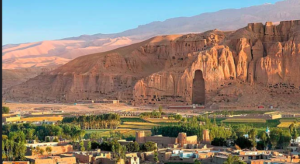
The crossing of the Hindu Kush was a nightmare that would haunt his men for years to come. The mountain passes were steep and treacherous, where every step could send a man tumbling into the abyss below. Men and horses alike struggled against the winds and the cold. The path was a frozen, jagged labyrinth, each twist and turn leading deeper into an unforgiving wilderness. The bitter cold seeped into their bones, and frostbite claimed the lives of the weak. Local tribes, the Sogdians and Bactrians, harassed the army with relentless hit-and-run attacks. They knew the mountain passes well, using the craggy terrain to their advantage, striking from hidden caves and disappearing like shadows before Alexander’s forces could retaliate. Yet, despite the hardships, the spirit of the Macedonian army was unwavering. They were the conquerors of the known world, and no force—no matter how vicious—would turn them back.
Alexander was a master of willpower. With his eyes burning with unshakable determination, he rallied his men, his voice cutting through the howling wind. “We are Macedonians! We do not retreat!” His words, like a spark in dry tinder, reignited their fading resolve. They pressed forward, inch by agonizing inch, through the icy winds and deep snow. Every day felt like a battle in itself, but somehow, they made it through. As they descended from the high peaks into the warmer lands of the Indus Valley, they entered a new world, one teeming with strange wonders and new challenges. It was here that Alexander’s Indian campaign truly began—a journey that would push his army to the brink of exhaustion and test even his own mortality.
The fortress of Aornos loomed above the Swat Valley like a sentinel of the gods, its sheer cliffs and impossible height making it appear an insurmountable obstacle. It was said to be impregnable, a place where even the great Heracles had failed in his labors. Yet Alexander was undeterred. The tribes of the region, the Aspasioi and Assakenoi, were fierce warriors who had never bowed to an invader, and they had taken refuge in the seemingly unassailable fortress. Alexander studied the fortress from afar, his mind racing with ideas, his heart resolute in his pursuit of victory. He knew that taking Aornos would be not only a military triumph but a symbolic conquest, proving once again that no defense, no matter how legendary, could stand against his will.
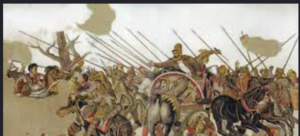
The siege began. Alexander’s engineers worked tirelessly, constructing siege mounds, their hammers echoing in the cold mountain air as they built platforms from which his soldiers could attack. Meanwhile, the Macedonian soldiers scaled the steep cliffs, climbing with a desperate determination under a hail of arrows and rocks from above. The tribesmen fought fiercely, their desperation evident in every strike. But Alexander, ever the tactician, had a plan. As the days wore on, the siege mounds grew taller, and his men began to construct a ramp, stone by stone, until it reached the very walls of the fortress. The final assault came quickly, and though it was brutal, the Macedonians broke through the defenses. Aornos fell, and Alexander stood atop its heights, gazing out across the valley below. The land stretched before him like a canvas, the promise of further conquests just over the horizon. His men cheered, their faith in their king renewed. But even in this moment of triumph, Alexander knew the hardest battles were yet to come.
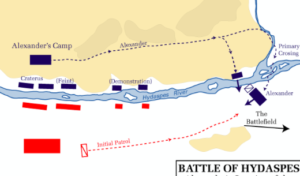
The Hydaspes River churned violently with the fury of the monsoon rains, its waters swollen and wild, as if nature itself sought to challenge Alexander’s advance. On its far bank stood King Porus, a towering figure with a proud warrior’s stance. Mounted on his massive war elephant, he commanded an army that seemed like an unstoppable force. His troops, with their war elephants and fierce warriors, had the kind of reputation that sent tremors through the heart of any invader. Alexander, ever the strategist, watched the river with careful consideration. He knew that a direct assault would be nothing short of suicide. The river was a formidable barrier, and Porus’ forces were entrenched, waiting for him.
But Alexander was a master of surprise. Under the cover of a furious storm, he led a detachment of his most trusted soldiers upstream, carefully crossing the river in secret, hidden by the torrential downpour. By the time Porus realized what had happened, it was too late. He was forced to divide his forces, unable to protect both his front and rear. The ensuing battle was a whirlwind of chaos, as Macedonian spears clashed with Indian swords, and war elephants trampled anything in their path. The ground seemed to shake beneath their feet as Alexander led the charge, his presence electrifying his men and filling them with newfound energy. Despite the confusion and carnage, Alexander’s tactics turned the tide. Porus, though valiant, was overwhelmed. In the end, he was forced to surrender, his once-mighty army in shambles.
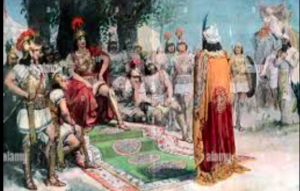
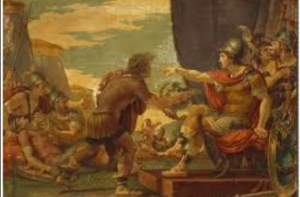
When the dust finally settled, Alexander approached the wounded King Porus, his voice calm but filled with respect. “How should I treat you?” he asked, as though the question was more than just a formality. Porus, proud even in defeat, lifted his head and replied, “As a king.” The words struck Alexander like a sword. Here was a man who, despite his defeat, retained his dignity and honor. Impressed, Alexander spared Porus’ life and not only allowed him to retain control over his kingdom but even made him a vassal, ensuring the loyalty of the once-defiant king. The victory at Hydaspes was a triumph, but it came at a cost. The battle had drained the Macedonian forces, and despite their victory, the soldiers were weary.
The monsoon rains continued to pour down on the army, turning the earth into a vast swamp. The heat was unbearable, and the soldiers, already stretched thin from years of campaigning, struggled to keep up the pace. Alexander’s army had marched through deserts, crossed treacherous mountains, and fought battles on countless fronts. They had seen comrades fall, endured starvation, and witnessed horrors that would haunt them for the rest of their lives. Yet still, they pressed on, for beyond the Hyphasis River lay the Ganges, and with it, the promise of unimaginable riches, the opportunity to carve out a new empire that would stretch to the very ends of the world.
But the men, exhausted and broken, could march no further. As Alexander stood before them, his voice filled with fervor, he pleaded with them. “We are close to the ends of the earth! The Ganges awaits us, and beyond it, the ocean! Will you turn back now, when we are so close?” His words, once a rallying cry, now fell on deaf ears. The men were no longer moved by promises of glory. They had followed him through every trial, but now, their bodies were tired, their spirits frayed, and their hearts yearning for home.
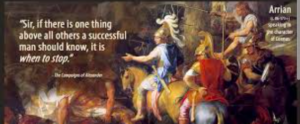
After days of silence and stubborn refusal, the voice of one of his trusted generals, Coenus, broke through. “My king, we have followed you to the ends of the earth. But we are tired. Our homes are far away, and our families await us. Let us return.” The words cut through Alexander like a dagger. His fury ignited, and for days, he refused to speak to anyone, retreating into his tent, brooding over the rebellion of his own men. But in the end, even he could not deny the truth. His army was spent. They had fought to the brink of their endurance. The mutiny at the Hyphasis marked the farthest point of his conquests. Reluctantly, Alexander gave the order to turn back.
The return journey was brutal. Alexander, in his relentless pursuit of conquest, had led his army into the Gedrosian Desert—a barren wasteland of scorching sand and jagged rock. The decision was a gamble, one that would cost him dearly. The heat was searing, and the land offered no respite. Water was scarce, and the men, already weakened by years of constant fighting, were pushed to their limits. Dehydration and exhaustion took their toll. Horses and camels dropped dead in the scorching heat, and men collapsed under the weight of their own despair.
Alexander, ever the leader, walked among his men, sharing in their suffering, but his presence could not save them all. The loss was staggering, and as the army staggered out of the desert, it was little more than a shadow of its former self. The march through Gedrosia was a stark reminder of the human cost of Alexander’s relentless ambitions, and yet, even in the face of such suffering, the loyalty of his men remained unbroken. They had followed him to the ends of the earth, and they would follow him home.
Despite the unimaginable hardships, Alexander’s legacy remained intact. Though his dreams of conquering the farthest corners of the earth had been dashed, the empire he had built would stand for centuries, a testament to his ambition, his brilliance, and his unyielding determination. But even as he returned to Babylon, Alexander could not forget the Ganges, nor the land that had eluded him, forever haunting his thoughts and dreams.The only escape was death….which would soon come to meet him”
As, the rhapsody finished, he had another sip of water to satiate his thirst, a final morsel and walked out of the room, leaving Nico wondering about the history and future of the Greek Empire !