


William Shakespeare’s Julius Caesar is far more than a mere dramatization of events from ancient Rome; it stands as a profound reflection on the sociopolitical anxieties of Elizabethan England. Written around 1599, the play emerged during a period of significant uncertainty, political tension, and widespread concern about the future of the English monarchy. By presenting the assassination of Caesar and the catastrophic consequences that follow, Shakespeare masterfully explores universal questions of power, legitimacy, leadership, and public opinion that resonated deeply with his contemporary audience, drawing direct and subtle parallels to their own national predicament.
The Problem of Succession and Political Instability
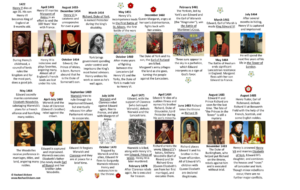
The political climate of late sixteenth-century England was marked by palpable unease over the issue of royal succession. Queen Elizabeth I was aging and had steadfastly refused to name an heir, creating widespread fears of instability, civil conflict, and even foreign intervention after her death. Shakespeare’s depiction of Rome on the brink of political transformation—facing the rise of a powerful figure and the subsequent civil war—directly mirrors these Elizabethan concerns. Caesar’s increasing dominance and potential to become a perpetual dictator provoke fears of tyranny, much like Elizabeth’s absolute power, though generally well-loved, still raised questions about institutional checks and balances. The conspirators, in turn, justify assassination as a defense of republican liberty, a concept deeply valued by some English political thinkers who worried about the unchecked power of the crown. Yet, the play refuses to present a simple division between heroes and villains. Instead, Shakespeare reveals the tragic complexity of political action, demonstrating how attempts to preserve traditional freedoms can inadvertently lead to their destruction, plunging the state into chaos. This ambiguity powerfully reflects Elizabethan anxieties about challenging established authority, even when that authority might—or appear to—become tyrannical, for fear of unleashing far greater disorder, as had been seen in England’s own Wars of the Roses.

Debates on Governance and the Nature of Leadership
The play also deeply engages with Renaissance debates about optimal forms of governance and the inherent nature of political power. Influenced by a resurgence of classical learning, Elizabethan intellectuals were captivated by Roman history and political philosophy, often seeing it as a blueprint or cautionary tale for their own society. Shakespeare draws upon these traditions to examine whether political stability and prosperity depend on strong, centralized leadership or on a more collective, republican form of governance. Caesar embodies charismatic, almost divine, authority, representing the ideal of a powerful monarch, while Brutus champions an idealistic republican virtue, echoing philosophical discussions about civic duty and liberty. Their conflict symbolizes competing visions of political order that were very much alive in theoretical Tudor England. However, neither vision ultimately succeeds. Caesar’s unchecked ambition provokes destructive resistance, and Brutus’s noble but naive idealism proves utterly incapable of managing the brutal realities of power and mob psychology. Through this profound tension, Shakespeare suggests that even the most carefully constructed political systems are inherently fragile and vulnerable to human flaws, be they ambition, pride, or misjudgment—a stark warning to a nation contemplating a change in its supreme leadership.
The Potency of Rhetoric and Public Opinion
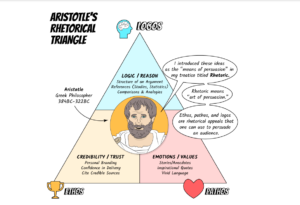
Another critically significant sociopolitical concern reflected in Julius Caesar is the burgeoning power of rhetoric and public opinion. Elizabethan England was witnessing the growing influence of public discourse, pamphlets, and sermons in shaping popular sentiment, particularly in London. Shakespeare dramatizes this phenomenon most vividly through the funeral speeches of Brutus and Mark Antony. Brutus, appealing to reason and abstract ideals of liberty, initially sways the crowd. However, Antony’s masterful manipulation of language, empathy, and raw emotion deftly transforms the fickle populace from passive observers and supporters of the conspirators into an enraged, vengeful mob. This pivotal scene illustrates with chilling clarity how political authority and stability often depend not merely on actions or legal right, but on the ability to shape narratives, control collective emotions, and master the art of persuasion. Shakespeare thus highlights the profound susceptibility of the “rabble” or the masses to demagoguery, a theme that remains strikingly relevant in any political landscape where popular sentiment can be swayed by powerful orators, a lesson perhaps not lost on the Protestant monarchy wary of Catholic dissent.
Individual Ambition Versus the Common Good
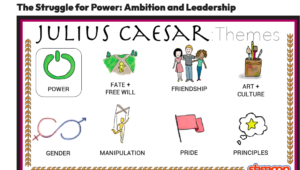
Furthermore, Julius Caesar intricately explores the complex relationship between individual ambition and the common good. The conspirators claim to act solely for Rome’s welfare, driven by patriotic duty. Yet, Shakespeare meticulously reveals how personal motives, deeply rooted pride, and profound misjudgment subtly influence their decisions, ultimately leading to their downfall. Cassius’s envy, Brutus’s idealism exploited by others, and their collective underestimation of Antony demonstrate how even noble intentions can be corrupted or thwarted by human imperfections. Shakespeare portrays politics as a realm where noble aspirations are frequently entangled with self-interest, personal vendettas, and the practicalities of power, making moral certainty agonizingly elusive. This realistic, often cynical, portrayal reflects the cutthroat complexities of court politics in Elizabethan England, where loyalty, individual ambition for advancement, and sheer survival were often inextricably interconnected, and where plots and counter-plots were not uncommon.
Ultimately, the sociopolitical background of Julius Caesar unveils Shakespeare’s extraordinary ability to transcend historical specificity, transforming ancient events into a timeless meditation on political power, governance, and human nature. By skillfully drawing parallels between the historical context of ancient Rome and the contemporary anxieties of Elizabethan England, he created a drama that serves as a powerful cautionary tale about the dangers of political extremism, the inherent instability of public opinion, and the enduring challenge of balancing authority with liberty. The play remains a profound and disturbing exploration of the forces that shape societies and determine the fate of nations, as relevant today as it was in 1599.