

The global landscape continues to be fractured by protracted armed conflicts that are exacting an immense and unrelenting toll on millions of civilians trapped behind front lines. In both the Middle East and Eastern Europe, recent military escalations, gridlocked diplomatic efforts, and systematic strikes on critical infrastructure have converged to worsen what international observers describe as profound, historic humanitarian crises. While geopolitical analyses frequently center on strategic maneuvers and international alliances, the immediate reality for families on the ground remains defined by continuous displacement, psychological trauma, and the systemic breakdown of basic survival networks, with no clear end in sight for non-combatants.
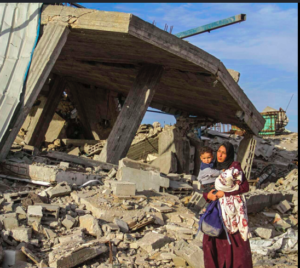
In the Middle East, the humanitarian plight across the Gaza Strip has reached a catastrophic precipice as persistent military operations continue to push populations to the brink of survival.
According to the United Nations Relief and Works Agency, the constant expansion of militarized zones has forced roughly 1.7 million displaced people into increasingly restricted, overcrowded spaces. Nearly 88 percent of these families are currently sheltering in makeshift tents that offer virtually no insulation against extreme seasonal temperatures. Compounding this daily threat of airstrikes is a severe deficit in essential supplies; restrictions on the entry of fuel, electrical parts, and basic machinery have caused a near-total collapse of local waste management and water-pumping stations. Over 70 percent of the population is now entirely dependent on emergency trucked water, forcing parents to choose daily between using scarce liquid for drinking or basic hygiene. This volatility has similarly expanded across the West Bank, where localized security operations and widespread property destruction have displaced tens of thousands of Palestinian refugees and left local hospitals facing a critical shortage of essential medicines, while settler attacks on agricultural communities have devastated local food security and rural livelihoods.
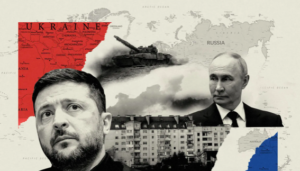
Meanwhile, across Eastern Europe, the war in Ukraine continues to inflict severe kinetic devastation on non-combatants as the conflict enters an increasingly destructive phase. Verified data from the UN Human Rights Monitoring Mission reveals that recent waves of coordinated urban bombardments have driven monthly civilian casualty counts to their highest levels in four years. The Russian military’s intensified use of long-range ballistic missiles, cruise missiles, and heavy aerial glide bombs within densely populated commercial and residential areas far from the front lines has resulted in thousands of documented deaths and injuries, turning standard city centers into active blast zones.
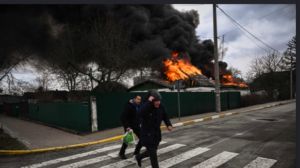
Closer to the battlefields, civilian populations face an evolving danger from short-range loitering munitions and first-person-view drones that routinely target civilian vehicles and rural paths. Local monitoring teams highlight that older persons are disproportionately affected by these strikes, often unable to reach underground shelters quickly due to limited mobility and the loss of local community support systems. Beyond direct physical trauma, the civilian population is suffering from large-scale, systematic strikes targeting the national energy grid. Repeated hits on power stations and electrical substations across seventeen oblasts have left hundreds of thousands of homes completely cut off from electricity, running water, and domestic heating during periods of extreme weather. As these parallel conflicts show no signs of abating, the eroding coping capacities of these vulnerable populations are pushing international aid resources to an unprecedented breaking point, leaving global humanitarian frameworks deeply strained.