
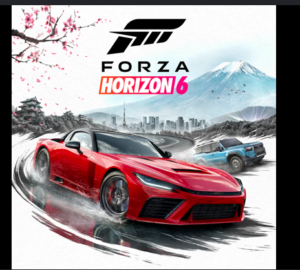
From neon drenched Tokyo expressways to silent mountain touge passes – Playground games goes all in on the ultimate J car fantasy.
T H E S E T T I N G
Tokyo, but make it five times bigger than anything before
Let’s be real – Forza Horizon has always been a game, focused more on the freedom of the world, than actually racing. Maps from Colorado to the UK, to Mexico, and finally Japan? Japan hits differently, being the biggest map Forza has ever seen being 145 km2. From the moment the opening festival drops you into a stylised Tokyo that’s reportedly five times larger than any previous Horizon city, you know Playground Games wasn’t playing it safe.
The vertical density of Tokyo is genuinely out of this world. While you thread to elevated expressways while convenience stores blur past at 160 mph (250 kph) below, then the city unfolds into suburban sprawl before eventually giving way to the countryside. It’s not just big – It’s layered. There is actually stuff happening everywhere: the neon chaos of the urban core fades into cherry-blossom-lined rural roads and then into the kind of misty mountain passes that feel lifted straight out of Initial D.
Playground has always been good at this kind of environmental storytelling through road design, but Japan gives them the richest possible canvas to work with. The cultural contrast writes itself.
T O U G U E C U L T U R E
Mountain passes, grip racing, and the spirit of the drift
If Tokyo’s section is about spectacle, the mountain tongue passes are where Forza Horizon 6 earns it. These aren’t just twisted roads, with amazing views – The game treats them as technical providing grounds dedicated to touge races, street races. These include events that capture narrow-road, high-stakes energy that fans have been asking for since forever. The physics underneath all of that is time, and patience.
Entry speed matters. Trail braking matters. The gap between clean touge runs and a sloppy one is immediate and satisfying – especially with a naturally aspirated Silvia or an old Koenigsegg Agera RS. This is where the car Roster starts to sing.

N E W F E A T U R E S
The Estate and the Wristband — old souls, new tricks
Two of the biggest gameplay additions this year pull in opposite directions — and that tension actually works in the game’s favour.
The Estate is your customisable mountainside property, and it’s more than just any garage upgrade. It functions as a genuine home base — you can personalise the space, park your collection in visible bays, and use it as a hub that feels like yours. It’s a small thing, but it adds a layer of personal investment that the series has never quite nailed before. There’s a reason car culture is about more than just the cars.
The Wristband progression system is a smart throwback structure that made early Horizon games feel… purposeful. Rather than just chasing XP bars and “influence”, you earn wristbands which allow you to access more areas, and cross specific challenges – Meaning your path in the game actually decides how you drive. Street races? Track specialist? Drift obsessive? The wristband system validates all of it, without forcing it on a single progression lane.

V E R D I C T
The Best Horizon in Years. Possibly ever.
Forza Horizon 6 succeeds because Japan isn’t just a location — it’s a perspective. The touge culture, the dense urban energy, the quiet reverence for specific kinds of cars — all of it gives the game a point of view that previous entries sometimes lacked. The Estate adds roots. The Wristband system adds direction. The tech upgrades remove friction. And the car roster makes the fantasy feel earned rather than assembled.
Is it perfect? There’s always more touge to want, always a corner of the map that could’ve gone harder. But as a complete package? Horizon 6 feels like the series finally found its magnum opus setting — and knew exactly what to do with it.