


Cliffhangers has the ability to captivate readers, leaving them on the edge of their seats, yearning for resolution, restitution and solution to an improbable problem all at once.
To delve into this intriguing phenomenon, let us first explore the concept of a Cliffhanger. We know it is a narrative device employed to create suspense and tension in a story and typically occurs at the end of a chapter or section, leaving the reader with a sense of uncertainty or anticipation about what will happen next. This emotion of incompletion serves to keep us invested in the story, eager to discover the outcome and resolve the tension that has been bubbling amongst the characters.

“The Silent Patient” by Alex Michaelides is a psychological thriller, follows the story of Alicia Berenson, a woman who is accused of murdering her husband and subsequently goes mute. Throughout the novel, we are drawn into her dark and even twisted world.
“Perhaps some of us are simply born evil, and despite our best efforts we remain that way.”
Trying to unravel the layers of what truly happened on that fateful night is not unlike the peels of an onion, leaving us shedding tears. Exasperated, feeling a sense of longing and loss , twists in the tails left me hanging on the brink of discovery. From shocking and unexpected revelations, each bend served to keep meengaged and eager to uncover the truth behind her silence. We became her companions and viewed the story through her eyes. By playing with our expectations, he effectively created a sense of incompletion that drove the narrative forward and compelled us to empathise, feel anger, pain and pathos all at once.
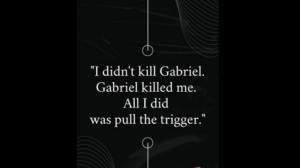
“I didn’t kill Gabriel. Gabriel killed me. All I did was pull the trigger.”
But what makes them such a potent storytelling tool? One key aspect is the element of surprise and delight. By leaving loose ends and unanswered questions, authors are able to subvert our expectations, keepus guessing about the outcome. This element of unpredictability adds an air of excitement, while we burn the midnight oil racing through the final chapter.
Another important factor is the sense of agency it affords us.. By creating a sense of incompletion, authors invite us to actively participate in the completion of the story, to bring our perspectives and interpretations to the narrative, adding a layer of depth and complexity to the reading experience. Rather than being passive consumers of the story, we become active participants, filling in the gaps with our imagination and creativity.
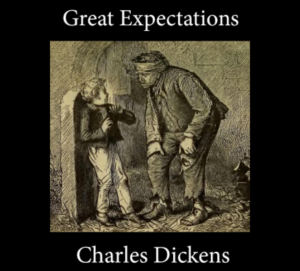
Charles Dickens, a prolific Victorian novelist known for his intricate plots and memorable characters was a master storyteller, using this to great effect in “Great Expectations” and “Bleak House.” In “Great Expectations,” one chapter ends with the revelation that Pip’s mysterious benefactor is none other than the escaped convict, Magwitch. This shocking twist leaves us befuddled, effectively sucking us into the whirlpool.
“We changed again, and yet again, and it was now too late and too far to go back, and I went on. And the mists had all solemnly risen now, and the world lay spread before me.”
In “Bleak House,” a series of plot blinders keeps us on tenterhooks . By linking the past of Lady Dedlock’s to the fate of Esther Summerson, Dickens creates drama and implores us to uncover the secrets that lie buried within the narrative. Nothing is what it seems and we need to read between the lines. “A person is never known till a person is proved.” He invites us to speculate and theorize the possible outcomes, drawing us into the weaves and wefts of the story and live vicariously in the pages of this Victorian saga. Loose ends and unanswered questions want us grappling at the straws, they manage to tingle and tease our imagination and whet our appetite for more !
So the next time you find yourself on the edge of your seat, eagerly awaiting THE END……Remember, what my most favourite story by Agatha Christie-The Murder of Roger Ackroyd has taught me-

“Every new development that arises is like the shake you give to a kaleidoscope—the thing changes entirely in aspect.”