

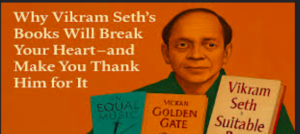
Vikram Seth did not just enter the world of Indian literature; he blew its doors wide open, redefining the boundaries of what a modern Indian writer could achieve on the global stage. Born in Kolkata in 1952 and deeply shaped by his diverse academic journeys through Oxford, Stanford, and Nanjing, Seth brought an intellectual fearlessness to his craft. He possessed a rare, burning passion to stretch the canvas of Indian storytelling, refusing to let it be confined by narrow definitions or predictable themes. His books are not merely stories; they are acts of profound artistic courage that expanded the spectrum of a nation’s literature by proving it could contain multitudes.
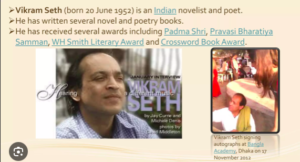
The true majesty of Seth’s literary passion lies in his breathtaking versatility. He approached every project not just as a writer, but as a craftsman eager to master entirely different artistic realms. Consider the sheer audacity of The Golden Gate. While the literary world expected prose, Seth delivered a brilliant novel written completely in five hundred and ninety rhyming stanzas. This was not a gimmick; it was a masterful display of rhythm and grace. He took an ancient European poetic structure and used it to paint a vivid picture of contemporary California life. By doing so, he showed the world that an Indian writer possessed the global vision and technical mastery to claim any style, any setting, and any era as his own.

Having conquered the delicate art of the novel in verse, Seth then pivoted to create A Suitable Boy, a monumental prose epic that stands as a towering achievement in world literature. At over thirteen hundred pages, this book is a love letter to the messy, vibrant, and beautifully complex reality of post-independence India. Through the simple, intimate quest of a mother seeking a match for her daughter, Seth weaves an astonishingly vast tapestry of four families navigating a young nation’s social and political awakening. The sheer scale of his empathy is staggering. He writes with equal warmth and precision about politicians, laborers, musicians, and lovers, capturing the very heartbeat of a country. Through this masterpiece, he elevated Indian literature into the realm of the great panoramic epics, demanding that the world look at India with the same depth and seriousness usually reserved for Tolstoy’s Russia or Dickens’s London.

Yet, Seth’s passion to expand the literary spectrum did not stop at the borders of his homeland. With An Equal Music, he stepped entirely outside the Indian experience to write a hauntingly beautiful story about classical musicians in Europe. The novel is a masterclass in sensory writing, managing the near-impossible feat of translating the invisible emotion of classical music into written words. It is a quiet, intense study of a violinist and a deaf pianist, proving that Seth’s understanding of the human heart is universal, untethered by geography or culture.
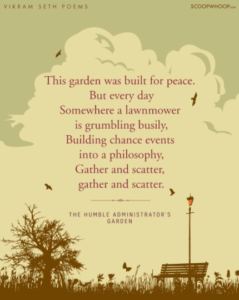
Even in his shorter works, like the whimsical poems of Beastly Tales from Here and There or the rugged, honest observations of his travelogue From Heaven Lake, Seth’s dedication to pushing boundaries is always on display. He has spent his entire career refusing to write the same book twice, constantly exploring new genres, forms, and voices.
To appreciate Vikram Seth’s books is to appreciate a writer who viewed literature as a horizon to be constantly expanded. His brilliant career did not just enrich Indian literature; it liberated it, giving future generations of writers the ultimate freedom to write about anything, anywhere, and in any voice they choose. His works remain an enduring testament to what happens when immense talent is paired with a boundless, fearless imagination.
George Orwell
George Orwell did not merely write books; he forged an architectural style of political truth, transforming the English language into an instrument of democratic survival.
Born Eric Arthur Blair in Motihari, India, in 1903, and sharpened by the brutal realities of colonial policing in Burma, imperial poverty in Paris, and the ideological betrayals of the Spanish Civil War, Orwell operated not as a detached intellectual, but as a frontline correspondent of the human condition. His lifelong crusade was to rescue objective truth from the jaws of political opportunism, forever altering the landscape of global literature. To read Orwell is to witness a writer stripping away the polite euphemisms of polite society to expose the raw, terrifying mechanics of power.
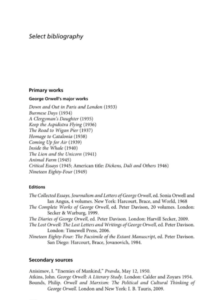
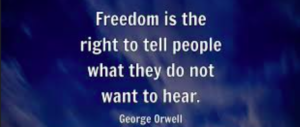
The sublime genius of Orwell’s bibliography lies in his radical commitment to clarity as a moral virtue. He understood that totalitarianism does not always begin with armies; it begins with the corruption of language. In his terrifyingly prophetic masterpiece, Nineteen Eighty-Four, Orwell did not just predict the future; he gave humanity the vocabulary to resist it. Concepts like Doublethink, Newspeak, and Thoughtcrime are not mere plot devices; they are precise psychological diagnoses of how regimes strip individuals of their internal reality. The sheer aesthetic discipline of the novel is breathtaking. Orwell intentionally rejects poetic decoration to deliver a prose that is as cold and unyielding as a winter morning, trapping the reader in the same claustrophobic, surveillance-heavy nightmare endured by Winston Smith. It stands as the definitive literary defense of objective reality, an immortal warning that freedom is the right to say that two plus two make four.
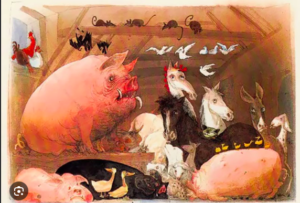
While Nineteen Eighty-Four acts as a monument of psychological dread, Animal Farm represents an unmatched pinnacle of satirical precision. It is a flawless beast fable that achieves the near-impossible: compressing the grand, complex tragedy of the Russian Revolution into a brief, devastating narrative that reads with the clarity of a children’s story. Orwell’s passion to expand the reach of political literature shines through the book’s deceptive simplicity. The gradual corruption of the commandment “All animals are equal, but some animals are more equal than others” remains perhaps the most linguistically perfect indictment of revolutionary betrayal ever written. Through this slim novella, Orwell democratized political critique, building a universal mirror in which every generation can recognize the seductive, creeping approach of authoritarianism.
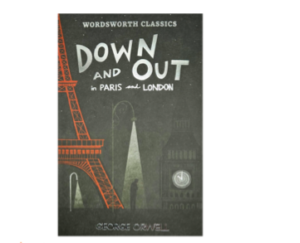
Yet, to limit Orwell to his famous dystopias is to miss the fierce, empathetic foundation of his earlier works. In his documentary masterpieces, Down and Out in Paris and London and The Road to Wigan Pier, Orwell pioneered a form of literary journalism that was revolutionary for its time. He did not simply observe the working-class poor; he submerged himself in their misery, scrubbing dishes in Parisian hotels and descending into the suffocating dark of Yorkshire coal mines. His prose in these works beats with an urgent, humanistic pulse. He demanded that literature confront the invisible structural violence of poverty, expanding the spectrum of English prose to include the voices of the discarded, the forgotten, and the broken.
Even in his non-fiction, particularly his seminal essay Politics and the English Language, Orwell’s dedication to literary hygiene remains unparalleled. He fought against political writing that served as a defense of the indefensible, arguing that when language becomes muddy, thinking becomes corrupt. He viewed clear writing as a political act of rebellion, a way to keep power accountable.

To fully appreciate George Orwell’s work is to recognize a writer who sacrificed his health, his safety, and his comfort to serve as the conscience of the twentieth century. His books do not offer easy comfort or romantic escapes; instead, they offer something far more valuable: an enduring toolkit for human freedom. Decades after his death, his voice remains an essential shield against tyranny, a timeless reminder that literature is at its greatest when it possesses the courage to look unpleasant facts straight in the face.