CURRENT AFFAIRS INTERNATIONAL
The United States and Iran moved toward reconciliation. On June 18, 2026, the two nations signed a memorandum of understanding (MOU) to officially conclude their recent armed conflict. Facilitated by mediation efforts from Pakistan, the agreement, which takes “immediate effect,” fundamentally alters the maritime and economic landscape of the region. A central component of this deal concerns the Strait of Hormuz. Under the new terms, Iran is authorised to claim fees for ship passage through this critical waterway for 60 days. However, this right is contingent upon Iran fulfilling its obligation to remove mines and technical obstacles from the shipping lanes within the first 30 days of the agreement. US has committed to providing relief on sanctions previously imposed on Iranian oil sales, a move that has already had immediate repercussions on the global economy.
Financial markets responded rapidly to these geopolitical shifts: global oil prices experienced a decline, while gold prices saw an increase of over 1%, reflecting market shifts in inflation expectations. But remember—the economic effects of the Super El Niño this year are yet to be felt. Simultaneously, Asian stock markets—most notably in Japan and South Korea—surged to record highs following the news.
On June 14, social unrest manifested globally in the form of “No Kings” protests, which saw over five million people participate in demonstrations against US President Donald Trump. Additionally, the international community has raised humanitarian alarms, with the United Nations expressing “grave concern” regarding the arrest of women in Afghanistan for alleged dress code violations, while health officials are monitoring a worsening Ebola outbreak currently affecting parts of Africa.
SpaceX completed its Initial Public Offering (IPO). The IPO was remarkably successful, raising a record $75 billion and pushing the company’s valuation to $1.77 trillion. This surge in market capitalisation officially positioned CEO Elon Musk as the world’s first trillionaire.
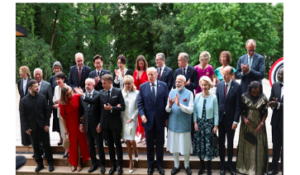
U.S. President Donald Trump on Wednesday told a roomful of global leaders “I’m the boss”, as he and other G7 heads acknowledged Ukraine’s improved battlefield fortunes with a unified pledge of support and fresh sanctions against Russia. Trump’s comment — a tongue-in-cheek acknowledgment of an unspoken truth hanging over the June 15 to 17 summit of the Group of Seven Western powers in the French resort of Evian-les-Bains — followed a joint leaders’ statement that could bolster Kyiv’s growing leverage in potential peace talks with Moscow.
CURRENT AFFAIRS INDIA
Prime Minister Narendra Modi met US President Donald Trump on the sidelines of the G7 Summit in Evian, France. During the meet, PM Modi brought up the safety of Indian seafarers, who make up 10 per cent of global seafarers, and stressed its importance. India has been invited as a partner country to the 52nd G7 Summit, being held from June 15 to 17. At the summit, Prime Minister Modi will be engaging with world leaders on issues of importance to India as well as to the Global South. This will be India’s 13th participation at the G7 Summit and Prime Minister Modi’s 7th consecutive participation at the summit.
The political landscape saw several high-profile legal and administrative developments. The Supreme Court dismissed a plea by Congress leader Meenakshi Natarajan challenging the rejection of her Rajya Sabha nomination, citing the court’s limited jurisdiction in ongoing electoral processes under Article 329(b). In West Bengal, a dissident faction of the Trinamool Congress (TMC) has moved to approach the Lok Sabha Speaker, seeking recognition as the “real TMC”. Meanwhile, in Jammu and Kashmir, police executed proclamation orders against United Jihad Council chief Syed Salahuddin and others in a 1996 terror-related case. In state-level news, Maharashtra is reportedly preparing legislation to recognise women as independent farmers and provide support measures for children of single mothers.
June 12 marked the sombre first anniversary of the Air India Flight AI-171 crash in Ahmedabad, which claimed 260 lives. Families gathered at the crash site for tributes, but the occasion was marked by continued grief and frustration as the final investigation report remains pending. While an initial report has been released, survivors’ families and the Federation of Indian Pilots have questioned the delay in transparency, particularly regarding compensation and technical investigations.

The National Stock Exchange (NSE) has filed for a ₹30,000-crore Initial Public Offering (IPO), set to become the country’s largest public issue. Meanwhile, the central government approved an 8.25% interest rate for the Employees’ Provident Fund (EPF) for the 2026 fiscal year, with deposits expected to commence this month. Market sentiment remains positive; benchmark indices like the BSE Sensex and Nifty50 have extended their winning streak to five consecutive sessions, driven by declining crude oil prices and favourable geopolitical updates
TECH TALKING
Apple’s Worldwide Developers Conference dropped last week, and for once, the company came in with something to prove. After years of incremental updates and a Siri that became something of a running joke in an era dominated by ChatGPT and Gemini, WWDC 2026 felt different. Less “here’s what’s new,” more “here’s what we fixed, and we’re sorry it took this long.”
Apple introduced iOS 27, macOS 27, iPadOS 27, watchOS 27, visionOS 27, and tvOS 27 at the keynote—the whole ecosystem, updated at once. But the headliner, the thing the entire event was built around, was Siri.
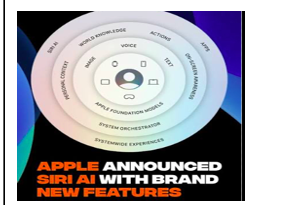
Siri AI: The Rebuild Nobody Saw Coming
The biggest announcement at WWDC 2026 was Siri AI. A ground-up rebuild of Apple’s long-struggling voice assistant, powered by the next generation of Apple Intelligence. The new Siri can hold real back-and-forth conversations, pull context from a user’s emails, messages, and photos, answer live questions from the web, and take action across apps. That last part is key. This isn’t just a smarter chatbot; it’s an assistant that actually knows what’s going on in your life and can act on it.
A dedicated Siri chatbot app lets you ask questions, generate text and images, analyze files, and more. Visual Intelligence is also getting the Messi treatment—you’ll be able to ask Siri questions about what your iPhone camera is seeing in real time, a feature Google has had for a while but Apple is now bringing into its own ecosystem with tighter privacy controls. The catch? Siri AI launches as an English-only beta, won’t be available in China due to regulatory requirements, and at launch will not be available on iOS or iPadOS in the EU. So the rebuild is real — the rollout is messier.
SPORTS SCOREBOARD
FIFA World Cup 2026 — The GOAT Refuses to Quit
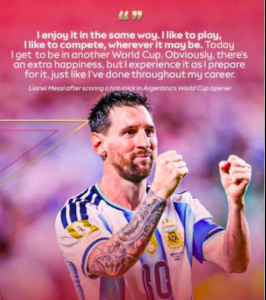
There were people who said Messi should sit this one out. That at 38, he should let Argentina’s new generation carry the torch. He answered in Kansas City on June 16, and he answered loud. Messi scored all three goals in Argentina’s 3-0 win over Algeria, cutting through the defense for the first, pouncing on a rebound in the 60th minute for the second, and then placing a precise left-footed shot past goalkeeper Luca Zidane for the third. In doing so, he became the oldest player to score a hat-trick at the World Cup. The performance also made him the joint highest scorer in World Cup history, tying Germany’s Miroslav Klose, while playing in his record sixth World Cup appearance.
The wider tournament has been electric too. England beat Croatia 4-2 in what many are calling the game of the tournament so far, and Jonathan David became only the second player alongside Messi to score a hat-trick at this edition. Canada also won its first ever World Cup match. The expanded 48-team format is delivering exactly the chaos and drama FIFA promised — and it’s only the group stage.
Argentina are chasing back-to-back World Cup titles for the first time since Brazil in 1962. If week one is anything to go by, they’ve got every chance.
F1 Barcelona GP — Hamilton’s Ferrari Fairytale
The narrative has been building all season. Lewis Hamilton leaves Mercedes, joins Ferrari, the most romantic team in the sport, and spends months waiting for that first win to come. In Barcelona last weekend, it finally did.
Hamilton secured his maiden Grand Prix victory for Ferrari, finishing ahead of George Russell and Lando Norris in what turned out to be the first all-British podium since 1968. His three-stop strategy outperformed the two-stop plans of the Mercedes pair, helped significantly by a Virtual Safety Car triggered mid-race, which Ferrari timed to perfection.
The championship picture shifted dramatically too. Points leader Kimi Antonelli was forced out with reliability issues in his Mercedes just four laps from the finish, handing Hamilton a swing in the standings at the worst possible time for the young Mercedes driver. An emotional Hamilton said on the radio: “You’ve helped me achieve this dream, and I can’t thank you enough.”
At 41, Hamilton is now the seventh-oldest race winner in Formula 1 history. The gap to Antonelli in the championship has tightened, and with that Ferrari momentum building, the title fight just got a whole lot more interesting.
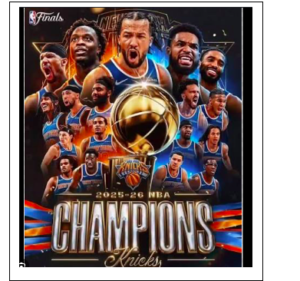
NBA Finals — New York’s 53-Year Wait Is Over-Madison Square Garden has waited a long time for this. The New York Knicks are NBA Champions for the first time since 1973, closing out the San Antonio Spurs in five games. Game scores: Knicks 105–95, Knicks 105–104, Spurs 115–111, Knicks 107–106, Knicks 94–90. Four of those five games were decided by single digits. It was exactly the kind of Finals the sport deserved. Two teams, fully committed, going at each other down the stretch every single night.
Jalen Brunson was the clear Finals MVP, scoring 45 points in the title-clinching Game 5 and averaging 32.6 points, 4.2 rebounds, and 4.6 assists across the series. On the other side, Victor Wembanyama and Dylan Harper gave the Spurs everything they had in the clutch, but their supporting cast couldn’t match the moment. Spurs coach Mitch Johnson put it simply after the final buzzer: “We weren’t ready to win an NBA championship. The better team won.”
The Knicks were the best defensive team throughout the playoffs, and they consistently delivered in the final minutes when it mattered most. New York went absolutely wild. It’s been over half a century, and it was worth every year of the wait.
SUBSTANTIAL SCIENCES
In a fundamental leap for temporal physics, scientists have successfully operated the world’s first nuclear clock, driven by the nucleus of a thorium atom rather than traditional electron transitions. By using highly tuned ultraviolet lasers to manipulate state changes within a thorium-229 nucleus, they have tapped into a central core that is significantly smaller and more densely bound than an electron cloud. This compact nuclear structure is extraordinarily shielded from the stray electromagnetic fields and thermal variations that cause conventional atomic clocks to drift. This unprecedented level of quantum stability does more than promise near-flawless timekeeping for deep-space navigation; it provides a highly isolated laboratory environment that could eventually allow researchers to detect whether the fundamental constants of physics, such as the fine-structure constant, are shifting over cosmic time.
NASA bid a sombre farewell to its MAVEN orbiter, officially declaring the spacecraft dead after more than a decade of rewriting our understanding of the Martian environment. Equipped with an advanced suite of mass spectrometers and magnetometers, MAVEN spent over ten years measuring the modern rate of upper-atmospheric stripping caused by the solar wind, providing definitive proof of how a historically warm, wet Mars lost its primordial liquid water. Yet the horizon remains bright, as NASA also finalized its elite four-person astronaut crew for the historic Artemis III mission, positioning humanity on the definitive precipice of its long-awaited physical return to the lunar south pole.
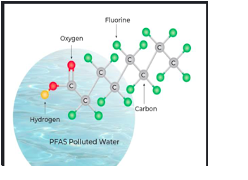
Environmental scientists have engineered a potent new weapon in the escalating global campaign against synthetic pollution. A research team successfully demonstrated that hydrogen radicals generated by high-intensity ultraviolet light can systematically dismantle the notoriously stubborn carbon-fluorine bonds of per- and polyfluoroalkyl substances, widely known as PFAS or “forever chemicals.” Remarkably, this new ultraviolet photo-reduction technique forces a rapid cascade of radical reactions that strip away the fluorine atoms cleanly, leaving behind harmless, basic organic compounds without requiring any added chemical reagents. By eliminating harmful secondary by products, this paves a clear, scalable path forward for municipal water purification infrastructure and offers a definitive solution to a generational ecological crisis.
MONEY MATTERS
The business world is currently seeing a massive shift toward cybersecurity as companies struggle to keep up with new threats driven by Artificial Intelligence. A major example of this happened today, June 18, 2026, when the global consulting giant Accenture announced it is spending roughly 4.175 billion dollars to acquire several specialized cybersecurity companies. By buying a majority stake in the firm Dragos, along with two other security companies called runZero and NetRise, Accenture is aiming to protect critical infrastructure like power grids and water systems from hackers. This move highlights a larger trend where operational technology, which refers to the systems that run physical machines and factories, is becoming a top priority for big business, especially as these systems get more connected to the internet and more vulnerable to AI powered attacks.
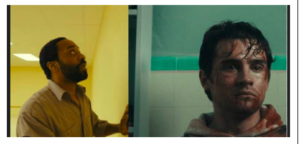
Meanwhile, the entertainment industry continues to show that the business of movies is changing rapidly. Steven Spielberg’s latest film, Disclosure Day, has become a major topic for business analysts. The movie earned 93.4 million dollars globally in its opening weekend, which is the biggest debut ever for an original film directed by Spielberg that is not part of an existing franchise. From a business viewpoint, this success is important because it shows that even in a market dominated by sequels and pre existing brands, big budget original ideas can still be highly profitable if they are marketed correctly.
This success is happening alongside a boom for lower budget films. Sleeper hits like Obsession and Backrooms are also performing exceptionally well, with Obsession recently crossing 286 million dollars globally. For studio executives, this success confirms that their strategy must be balanced. They need the massive blockbuster movies to draw huge crowds, but they also need smaller, lower cost films that rely on internet buzz and word of mouth to provide a high return on investment.
These stories show a common thread in business today. Whether it is a giant firm like Accenture betting billions on cybersecurity or a movie studio trying to figure out the right mix of films to release, the main goal is adapting to a fast changing world. Companies are constantly forced to evaluate new technology, changing consumer habits, and rising security risks to stay ahead of the competition. For investors and business leaders, the takeaway is clear. Success in 2026 depends on staying flexible, investing in digital security, and understanding exactly what the modern consumer wants, whether that is a safer factory floor or a blockbuster experience at the theater.