“Heal the world
Make it a better place
For you and for me and the entire human race
There are people dying
If you care enough for the living
Make a better place for you and for me”
- Michael Jackson, “Heal the World”
The world is currently in a sorry state. The future is up to the younger generations, but unfortunately, they are suffering the worst of the consequences for the decisions made by the leaders they did not choose. The impact of conflict on children and education varies by region, but consistently involves the destruction of infrastructure, trauma, and the systematic disruption of learning. Below is a breakdown of how current and recent conflicts have specifically affected these areas.
Gaza: The Israel-Palestine Conflict:
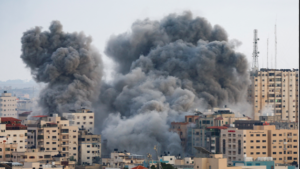
It began in the late 19th century with the rise and spread of Zionism—the movement to establish a Jewish state. In 1917, in British-governed Palestine, the Balfour Declaration expressed British support for a Jewish “national home,” causing tensions with the existing Arab population who also sought self-determination. In 1947, the UN proposed dividing the territory into separate Arab and Jewish states. The Jewish leadership accepted this, but Arab leaders viewed it as unjust and favouring the Zionist movement. Israel and Palestine have had mutual tensions ever since. On 7 October 2023, following months of violence between the two, Palestinian extremist groups, including Hamas, launched a coordinated surprise attack on Israel called “Operation Al-Aqsa Flood”. The following day, Israel formally declared war on Palestine.
By now, the damage done is unimaginable. Over 80% of schools and educational institutions have been damaged or destroyed since October 2023. Children face severe shortages of food, water, and sanitation, exacerbating malnutrition and health risks. They are forced to endure the constant threat of explosive weapons, leading to widespread physical injury and long-term psychological trauma. Few are able to escape and go through rehabilitation.
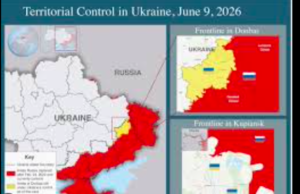
Ukraine: The Russo-Ukrainian Conflict:
It began with the ousting of Ukraine’s pro-Russian president, Viktor Yanukovych, after he withdrew from a planned association agreement with the European Union. In response, Russia occupied the Crimean Peninsula, and began arming and supporting separatist forces in the eastern Donbas region, sparking a war that lasted eight years. This escalated into a full-scale war on February 24, 2022, when Russia launched a land, sea, and air invasion of Ukraine, marking the largest conflict in Europe since World War II. Underlying tensions leading up to these events included Ukraine’s desire to align more closely with Western nations and its interest in potential NATO membership, moves which Russia perceived as a threat to its influence and sovereign security.
Since then, thousands of schools have been damaged by shelling, with more than 340 educational facilities impacted a year. Millions of children have been displaced, interrupting their education frequently. It has created an atmosphere of fear, impacting the mental health and daily stability of children significantly.
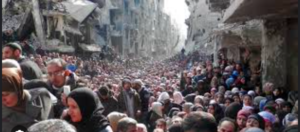
Syria: The Aftermath of a Civil War:
Even after the Civil War ended with the overthrow of the dictator Bashar Al-Assad, the after-effects show how hard it is for a country to recover after such intense fighting. Millions are left without access to formal education due to destruction of infrastructure and a lack of essential resources like heating and electricity. Poverty driven by the war leads many minor boys to work in hazardous labor, while girls face increased risks of early marriage and exploitation.
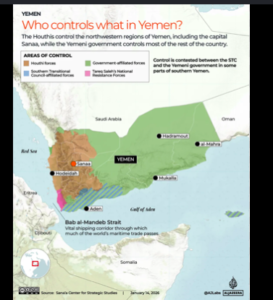
Yemen: 11 Years of War:
The civil war in Yemen began in 2014, caused by the political instability that followed the 2011 uprising against president Ali Abdullah Saleh. It escalated in September 2014 when the Houthi extremist movement (Ansar Allah) seized control of the capital, Sanaa, and ousted the government. Then, in March 2015, a military coalition led by Saudi Arabia intervened, launching airstrikes and a naval blockade to restore the internationally recognized government led by Abdrabbuh Mansur Hadi. This marked the conflict’s transition into a broader war, widely viewed as a struggle between Saudi Arabia (supporting the government) and Iran (supporting the Houthis). Currently, the situation in Yemen is a persistent and multifaceted crisis involving a mix of internal power struggles, regional proxy dynamics, and a catastrophic humanitarian emergency.
Yemen is experiencing what international organizations describe as the world’s largest humanitarian crisis, with approximately 22,000,000 people—roughly half the population—requiring humanitarian assistance. It country faces an acute food security crisis, with over 18,000,000 people classified as acutely food insecure, and several regions are at risk of famine. Delivery of aid, unfortunately, remains severely hampered by ongoing conflict, economic collapse, and targeted restrictions imposed by warring factions, particularly the Houthis, who have restricted humanitarian groups and arbitrarily detained UN and civil society staff. Years of conflict have left over 4,000,000 children uneducated, aggravated by unpaid teachers and the destruction of educational infrastructure.
The civil war in Sudan unfortunately still rages, with around 400,000 casualties, and more than 4,300 children have been killed or maimed since. They face high risks of displacement, family separation, and recruitment into armed groups, which remains a critical concern.