

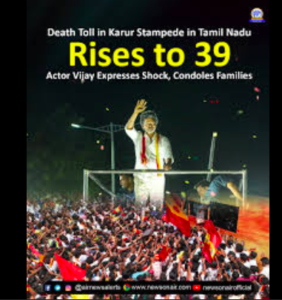
September 27, 2025, Karur district, Tamil Nadu. It began as a routine day, organisers had sought permission for a rally of 10,000 to begin at 12 noon. Approximately 25,000-27,000 people kept waiting for more than 07 hours to catch a glimpse of their favourite star Tamilaga Vettri Kazhagam (TVK) founder and actor Vijay. This was a disaster from the word go, that led to the death of 41 people at the overcrowded roadshow. The predictable musical chairs of blame game began with critics blaming the DMK government responsible for failure to provide a proper venue for the political rally, while some pass the buck, to the event management team’s inability to learn from his previous campaign-the turnout, mass hysteria and unrestrained behaviour of his followers.
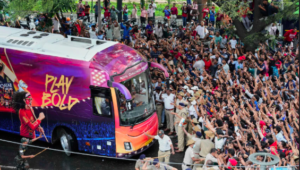
India has witnessed 4 such fatal stampede incidences since 2024. Chinnaswamy stadium, Bengaluru, Prayagraj ,Mahakumbh Mela, Tirupati, and Hathras. Such stampedes and disasters are far too common at religious gatherings, sporting events and even music concerts across the globe. Authorities claim that often large scale events lack knowledge of complex logistics of crowd mobilisation and safety management, lack of clear signages, loudspeaker for public instructions, absence of trained staff at entry and within seating areas. Plans for traffic and crowd control, are often swept under the carpet, in adhering to the maximum number of participants, assembly point, punctuality of the event, and in providing names and contact details of people organising the event.
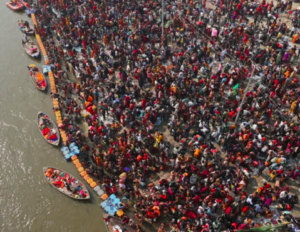
Such systemic failures of unpreparedness in underestimating crowd size, poor crowd control with absolute disregard and apathy to the lives lost is a travesty. What is even more shocking is that, crowd crushes can be almost entirely preventable. Stampedes often are a “black hole effect”, dangerous, deadly, and immensely scary. In dense crowds, a pile up leads to the mob mentality of chaos, fear and panic leading to accidents and casualties, just like dominoes falling rapidly.
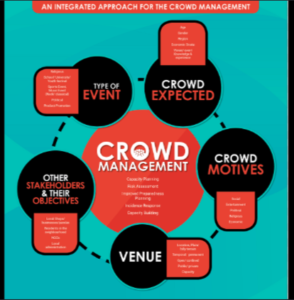
National Disaster Management Authority (NDMA) states such tragic events are easy to predict , and inexpensive to prevent with adequate crowd management in public gatherings. It has recommended clear guidelines for adequate safety measures and smooth functioning of any large scale public gathering.
Some key takeaways and critical lessons to implement are:-
- Pre-Event Planning: Right from the beginning one must analyse crowd estimation basis past trends and data, ensure optimal capacity planning, safe site selection and layout design. Emphasis must be laid out on clear route planning with unobstructed movement path, entry, exit routes neatly mapped out.
- Structural Safety: Installing barriers and railings if necessary, virtual check ins with approximate waiting time and adherence to the schedule without any delay. Effective communication systems and mobile connectivity to manage crowds.
- On-Ground Management: Traffic and parking management, with use of real-time crowd monitoring via CCTV and analytics.
- Exigency Plans: Educate, train and create public awareness of risks and safe behaviour, conduct training and drills for all agencies, and provide clear detailed Standard Operating Procedures (SOPs) for event management. Emergency Response: Availability of on-site medical aid, Quick Reaction Teams (QRTs),fire exitsetc with a clear Incident chain of command for swift decision-making.

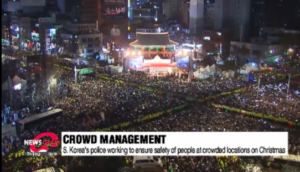
We must take a page out of global best practices in Saudi Arabia that uses crowd simulations, restricted entry timings, and improved route planning for Haj. Wembley stadium, London has multiple exits and advanced evacuation systems to handle 90,000 people safely. An advanced CCTV-based AI system to monitor crowd density in real time and provide timely warnings in South Korea, or implementing RFID timed tickets and staggered entry measures to prevent sudden crowding in Japan. Technology can play a pivotal role to prevent such exigencies. Predictive AI simulation, congestion visualization, drone video surveillance can be implemented to provide post event evaluation and improvement by plugging gaps.
Most importantly, the onus of all the stakeholders to follow proper decorum, and any lax must result in stiff fines and penalties. Regulations and laws to systematically plan, implement strategies for efficient movement in public spaces, large gatherings, or events and disaster mitigation under the Disaster Management Act, 2005 must be strictly enforced by the local/district administration with support, guidelines from the state and the national authorities.