
What tipped the iceberg?
Nepal, a Himalayan country with its antecedents in Kirati roots is nestled between India and China. Its name originating from the sage ‘Ne’ or the indigenous Newar community has witnessed a decade long civil war, a Maoist uprising and a tumultuous tango of democratic dance since 2008, when the 240-year-old monarchy paved way to a Federal Democratic Republic. The country has since then been governed by a dozen governments that have sparked many upheavals and demonstrations at large.
However, the latest protests, by the youth, primarily people in the ages 13 to 28 – the cohort known as Generation Z – proved to be Nepal’s most macabre in decades.
On the 4th of September’25, the government of Nepal imposed a ban on 26 popular social media platforms including Facebook, X, Instagram, YouTube , LinkedIn, WhatsApp, Snapchat amongst others. The Nepal Telecommunication authority directed the deactivation basis a Supreme Court order on petitions filed for restrictions on unlicensed platforms broadcasting ads and content in Nepal.
This diktat came under flak by many, who called it a threat to their freedom of expression and freedom of press to operate without limitations, bias and restraint. The Committee to Protect Journalists and Access called this censorship undemocratic, urged transparency and restoration of complete access and flow of two way communication, thereby allowing unrestricted flow of ideas, thoughts and information.
Meanwhile, more worrisome was the proposed social media bill to be passed in the Parliament-that could bring about a sweeping change in the law, permitting imprisonment and restrictive fines for content deemed as seditious and against “national interest”. This drew criticism from civil society groups that felt this was clamping on their fundamental rights by use of arbitrary power.
The protests, referred to as “Gen Z protests,” (homage to the Generation Zoomers -people born between 1996 and 2010- considered digital natives) was mobilized by young Nepalis under the age of 30, who gathered in their school and college uniforms. Demonstrations though not formally aligned with any political party were reportedly coordinated by Hami Nepal, a youth-focused non-profit established in 2015. Kathmandu Mayor Balendra Shah, an independent politician, who won the mayoral elections with his active social media campaign was also vocal in supporting it.
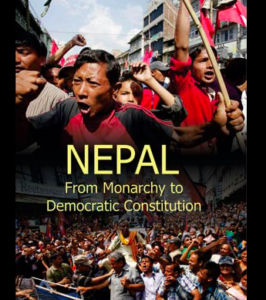
Large scale demonstrations and protests mobilized by youth began on 8th September in Maitighar, near the iconic Mandala monument in Kathmandu. Other cities like Pokhara, Butwal, Birgunj gathered steam. The peaceful marches and riots quickly spiralled out of control as some participants, on motorcycles broke through barricades and tried to storm the Parliament complex. Police and armed personnel retaliated with tear gas, water cannons, and rubber bullets. Protesters reportedly responded with sticks and bottles.
Over 400 were injured and 51 reportedly died with 30 killed by gunshots and 21 succumbing to fatal burns and wounds as per the country’s Ministry of Health and Population. Curfew was imposed after the protestors breached the Parliament, attacked and targeted homes of politicians in both power and opposition, a reflection of their years of pent-up anger, grievance and the perceived privilege of the mighty rich and powerful.
Though, the Social media ban was the final straw that broke the camel’s back, the mounting anger against the government had been building up over the years. The incorrect portrayal of the uprising as an aftermath to the youth’s addiction and heavy dependence on social media downplays the concurrent anger and frustration of the public.
The movement, they assert is a clarion call for systemic reformation and accountability of politicians across parties with course correction on inequality and corruption that seems to have plagued this nation. Viral videos of “nepo kids”, children of affluent politicians, their luxurious lifestyles seems to further widen the chasm, highlighting the tone deaf attitude verging on lassitude, also contributed to the wrath. The rampant apathy, years of corruption, lack of opportunities and employment, as Nepal faces an ongoing job crisis only seem to add fire to the fuel.
Statistics claim almost 5,000 Nepalese young people leave for foreign shores daily for employment and adequate wages. Nepal’s economy is dependent on repatriations sent home, a whopping 33.1% of Nepal’s GDP is enriched from personal remittances, according to the World Bank, a number that has been growing rapidly since the country’s rise as democratic nation.
Prime Minister K.P Sharma Oli initially defended the ban as necessary and suggested the violence was a tool of infiltrators to provoke and instigate unrest in the country. He has since resigned along with the Home Minister and Communications Minister and hoped for peaceful dialogue and better sense to prevail. The wide scale mayhem led to revoking the social media ban and grant access to the restricted digital platforms. Former Chief Justice Sushila Karki, has been sworn in as the Prime Minister of the interim government, the first woman to lead the country.
 The world watches as Nepal trudges the path to a slow and steady recovery. We must understand that desecrating democracy, its functioning or institutions can lead to catastrophic consequences. With that said, vandalism and violence are neither the solution nor a means to one. Peaceful protests, debate and consensus building are the proper path. As Martin Luther King once said “In spite of temporary victories, violence never brings permanent peace.”