

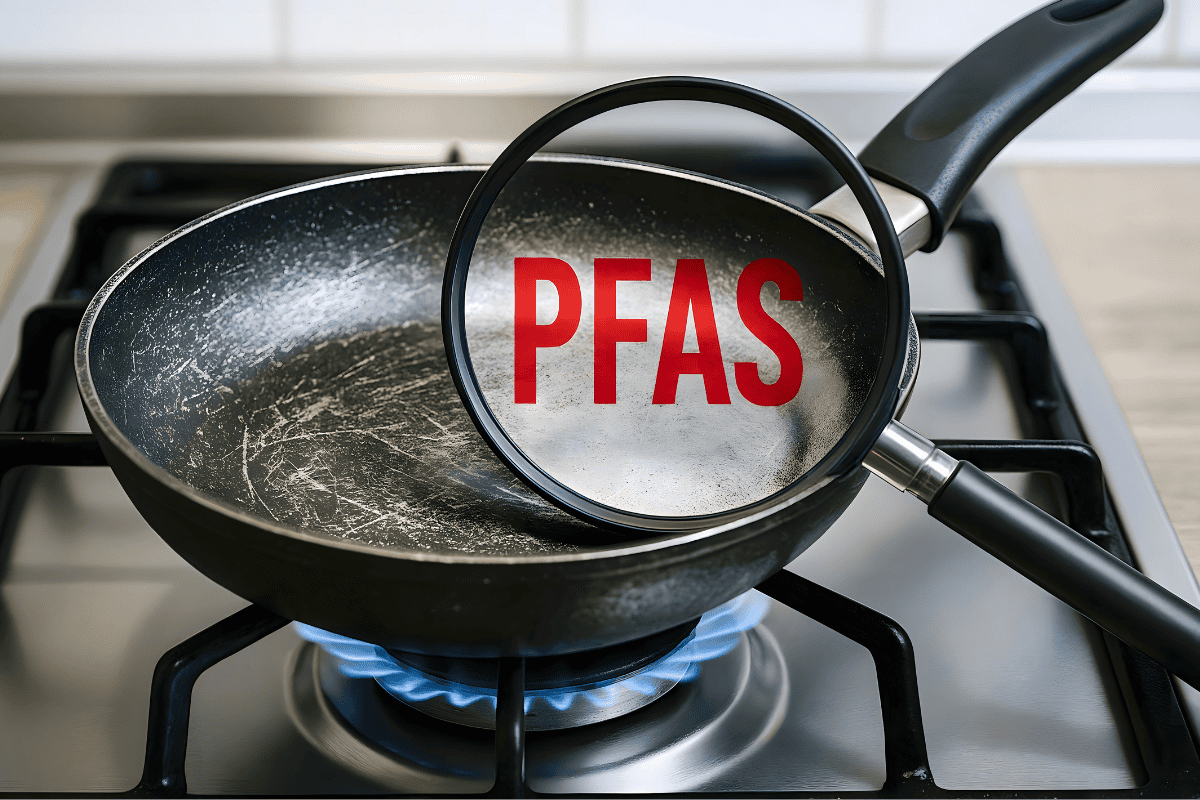
This story, one about generational-level poisoning and chemical-caused bird slaughter, ironically begins with an object used to preserve food, and sometimes life: a refrigerator. In the 1920s, these cooling cupboards were beginning to enter homes as a modern miracle. However, with many of these miracle boxes came a cost: dangerous refrigerant gases such as methyl chloride, ammonia, and sulphur dioxide.
In Chicago alone, methyl chloride leaks were blamed for multiple deaths. Other gases were flammable, toxic, or both, and could turn a simple household appliance into a silent hazard. Chemical giant DuPont spotted an opportunity and assigned chemist Dr. Roy J. Plunkett to look for safer refrigerant compounds. In 1938, while experimenting with tetrafluoroethylene, or TFE, he discovered that a cylinder of the gas had unexpectedly polymerised into a slippery white powder called polytetrafluoroethylene, or PTFE.
TFE is made of carbon atoms bonded to fluorine atoms. Under the right conditions, its molecules can link together into long chains, forming PTFE. Plunkett began testing it and received surprising results. He poured water on it, but it proved to be hydrophobic. A similar response was seen with many acids and bases. It would not corrode easily. It was heat-resistant, chemically stubborn, and almost impossibly slippery. It seemed indestructible.
The Chemistry
The reason lay in the carbon-fluorine bond. Fluorine is small and extremely electronegative, which means it pulls strongly on shared electrons. This creates one of the strongest bonds in organic chemistry, forming a protective fluorine-rich shield around the carbon chain.
DuPont believed the material was ready. Taking the “te” from tetra, the “fl” from fluoro, and an “on” inspired by other chemical names of the time, Teflon was born.
At the beginning of its journey, Teflon was recognised by scientists working on the Manhattan Project as one of the few materials capable of withstanding the highly corrosive uranium hexafluoride used in nuclear fuel production. After the war, DuPont wanted to sell it commercially. However, creating Teflon from TFE was not simple. The polymerisation reaction releases heat, and if it is not controlled properly, TFE can decompose violently.
Thus, in 1951, DuPont began using PFOA, or perfluorooctanoic acid, supplied by 3M. PFOA acted as an emulsifier, helping PTFE particles stay dispersed during production. It helped turn a stubborn, slippery solid into something easier to manufacture and coat onto surfaces. A few years later, French engineer Marc Grégoire saw its potential and helped create the non-stick pans that are still used today.
The Magic Chemical’s Toll
To many, this magic chemical seemed too good to be true. And it was. In the late 1990s, Wilbur Earl Tennant, a farmer in Parkersburg, West Virginia, found that his cows were falling sick and dying after drinking from a creek near a DuPont landfill. He hired lawyer Robert Bilott to investigate. Armed with boxes of VHS videotapes, the search for the truth began.
Bilott soon found himself surrounded by tens of thousands of pages of internal documents. The chemical in the water was PFOA, linked to waste from the nearby production process. PFOA belongs to a class of chemicals that do not break down easily, building up in bodies and environments—a “forever chemical” hidden under the shine of industrial progress.
PFOA’s structure made it biologically worrying. It could bind to proteins in the blood and move through the body, interfering with internal organs and biological processes. Meanwhile, Teflon-coated pans carried another danger when overheated. At very high temperatures, PTFE can release fumes and ultrafine particles.
Polymer Fume Fever
In humans, inhaling these fumes causes fever, fatigue, chest tightness, and headaches.
Avian Sensitivity
For birds, the consequences are fatal. Their respiratory systems are extremely sensitive, and exposure causes rapid, fatal lung damage.